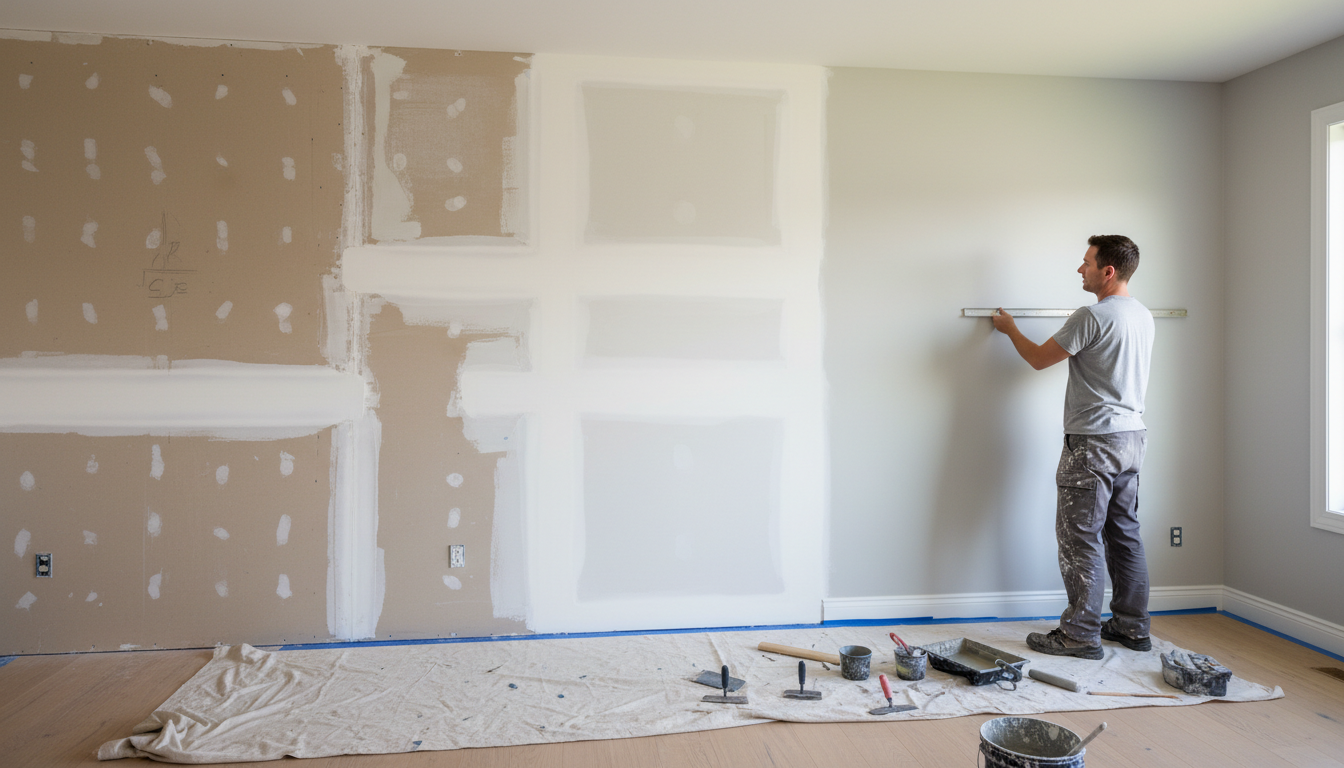
Fresh plaster typically requires two to four weeks to dry completely during the colder months before it is safe to decorate. When considering how long after plastering before painting Edinburgh winter conditions can extend drying times; it is essential to ensure the surface has turned a uniform pale pink to avoid bubbling or peeling.
As the Edinburgh frost sets in and the Christmas countdown begins, many homeowners find themselves in a race against time to finish interior renovations before the festive guests arrive. The damp, heavy air typical of a Scottish winter poses a significant technical challenge for fresh plaster, often leaving you questioning if those walls will ever be dry enough for a paintbrush. Navigating the balance between the calendar and the climate is essential; rushing this stage often leads to trapped moisture, flaking paint, or surface salt issues that can ruin your hard work. This guide provides a professional perspective on winter drying timelines in our local area. You will learn how to accurately judge moisture levels, the safe ways to accelerate drying, and why the final mist coat remains the most critical step in your holiday renovation schedule.
The Edinburgh Christmas Deadline: When is it too late to plaster?
The rush to finish home renovations before family arrives for Christmas is a staple of December in the city. If you are planning to refresh a guest room or lounge, understanding the timeline is critical. While a standard skim coat might dry in three to five days during a warm Scottish summer, winter brings a different set of challenges. The high humidity levels common across the Lothians throughout November and December significantly retard moisture evaporation from fresh gypsum.
To determine how long after plastering before painting Edinburgh winter conditions require, you must account for this seasonal buffer. For those aiming to have a room fully decorated by December 25th, the last call for booking professional plastering services in Edinburgh is typically the first week of December. This window allows roughly ten to fourteen days for the plaster to transition to a uniform pale pink, plus a few days for the essential mist coat and final topcoats. Attempting to plaster any later than December 10th carries a high risk; you may find yourself hosting Christmas dinner in a room that still smells of damp plaster, with walls too wet to hold a coat of paint. Early planning ensures the structural moisture has fully exited the building before the first guest arrives.
Why Edinburgh winter weather slows down your renovation
The physics of an Edinburgh property dictate the actual schedule of your renovation. While a modern apartment in a new development might respond predictably to central heating, a traditional tenement presents a different set of variables. These historic buildings feature thick sandstone walls that act as a massive thermal mass. Throughout the winter, this stone absorbs the biting cold from the exterior. Because traditional solid wall construction lacks a cavity to break the thermal transfer, the internal surface of the wall remains significantly colder than the ambient room air. This cold surface actively retards the evaporation process required for gypsum to set.
Environmental factors like the dew point also play a critical role. When warm, moisture-heavy air from the wet plaster meets the cold stone surface, evaporation slows to a crawl. If the wall temperature is low enough, moisture can even condense back onto the surface, keeping the plaster damp for much longer than expected. This is a primary reason why determining how long after plastering before painting Edinburgh winter conditions allow is more complex than following a manufacturer's label.
The signature high ceilings of the city's period homes further complicate the process. Heat naturally rises, pooling near the cornicing while the lower sections of the walls stay in the cold zone. Without a reliable local plasterer who understands how to manage these architectural quirks, it is easy to underestimate how external dampness permeates the building. Unlike plasterboard, which allows for some breathability, plaster applied directly to solid stone must push all its moisture into the room. This makes the internal drying time entirely dependent on the wall’s temperature and the building's ability to shed its thermal chill.
Realistic drying times for fresh plaster in colder months
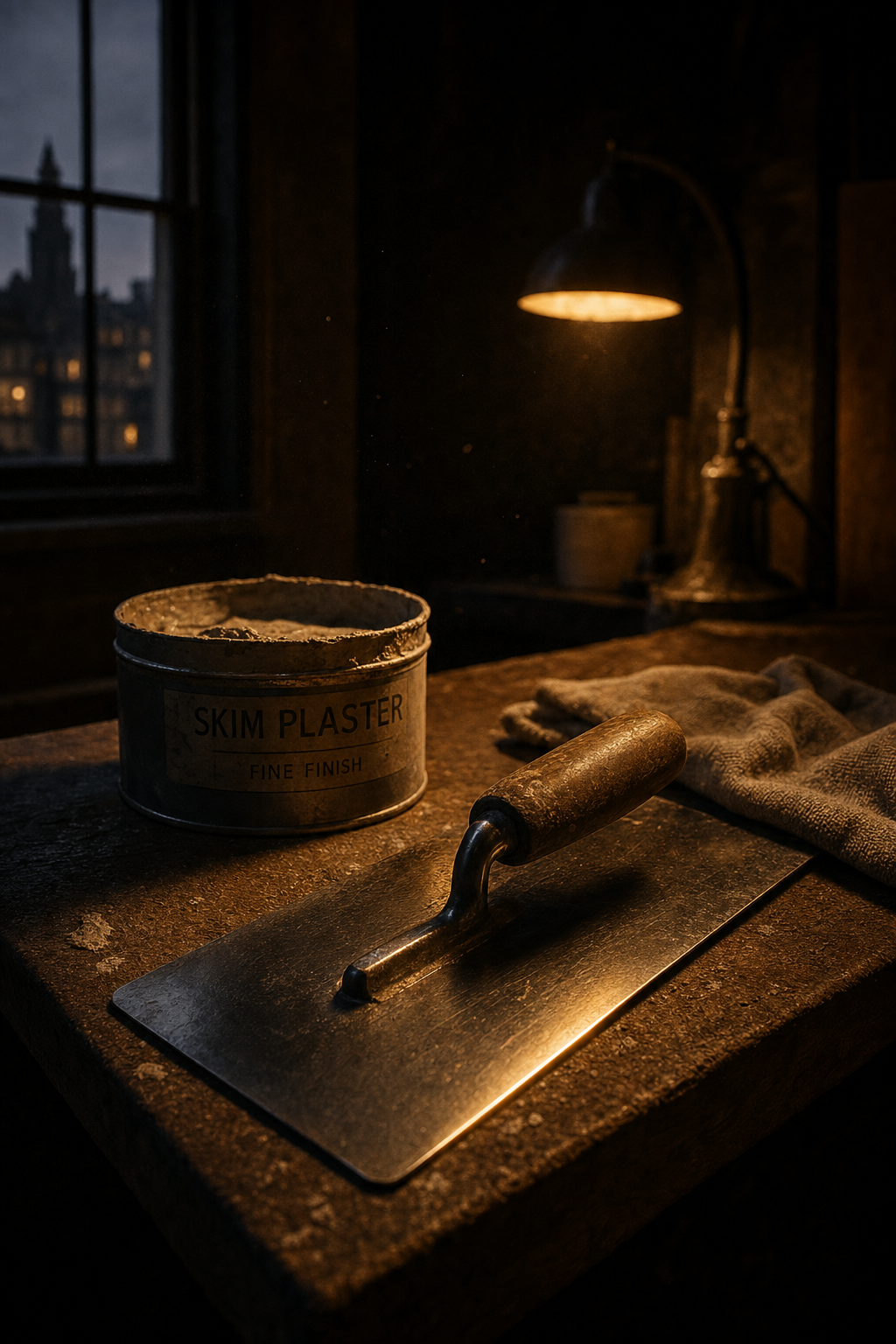
Given the environmental factors in the Lothians, relying on generic advice can lead to failed paintwork. If you are trying to calculate how long after plastering before painting Edinburgh winter projects require, you must first categorize the work by its depth and the surface underneath. A thin layer of finish plaster on moisture resistant board dries significantly faster than a heavy bonding coat applied to a damp prone tenement wall.
Type of Plastering Work | Typical Surface | Winter Drying Estimate |
|---|---|---|
Skim Coat Only | New Plasterboard | 7 to 10 Days |
Skim Coat Only | Existing Sound Plaster | 10 to 14 Days |
Two-Coat (Bonding & Finish) | Solid Stone or Brick | 3 to 4 Weeks |
Deep Patching | Electrical Chases | 14+ Days |
The presence of central heating changes the equation but requires caution. With the heating off, moisture lingers in the air, and drying can stall entirely during a Scottish cold snap. With the heating on at a consistent 18 to 20 degrees, you might shave a few days off a skim coat, but you cannot safely force the deep moisture out of a two coat stone job in under three weeks. Providing a steady, moderate temperature is far more effective than blasting the radiators for a few hours. If you have concerns about a specific room layout or wall type, get in touch with our team for a professional assessment of your timeline.
How to tell if your plaster is truly dry enough to paint
Identifying the visual change from a deep, muddy brown to a uniform pale pink is the standard metric for dryness, but it can be deceptive during a Scottish winter. In the high-ceilinged rooms typical of the New Town or Marchmont, the drying process is rarely linear. You must pay close attention to the external corners and the junction where the wall meets the ceiling or decorative cornice. These areas are frequently the last to turn pink because air circulation is often restricted in the corners, and rising damp air pools near the top of the room.
Beyond the color, you should use a tactile test. Press your palm against the fresh plaster and compare the sensation to an original, dry wall in another part of the house. If the new plaster feels noticeably colder to the touch, it is still holding deep-seated moisture. This thermal difference is a clear indicator that evaporation is ongoing. Furthermore, look for any lingering dark patches or 'sweat' marks where water beads on the surface. These are signals that the plaster is not yet stable. To accurately judge how long after plastering before painting Edinburgh winter conditions require, wait until these cold spots and dark patches vanish entirely. If you are unsure, consulting a reliable local plasterer for a professional moisture check can prevent you from sealing in dampness that will eventually ruin your finish.
Safe ways to speed up plaster drying for the holidays
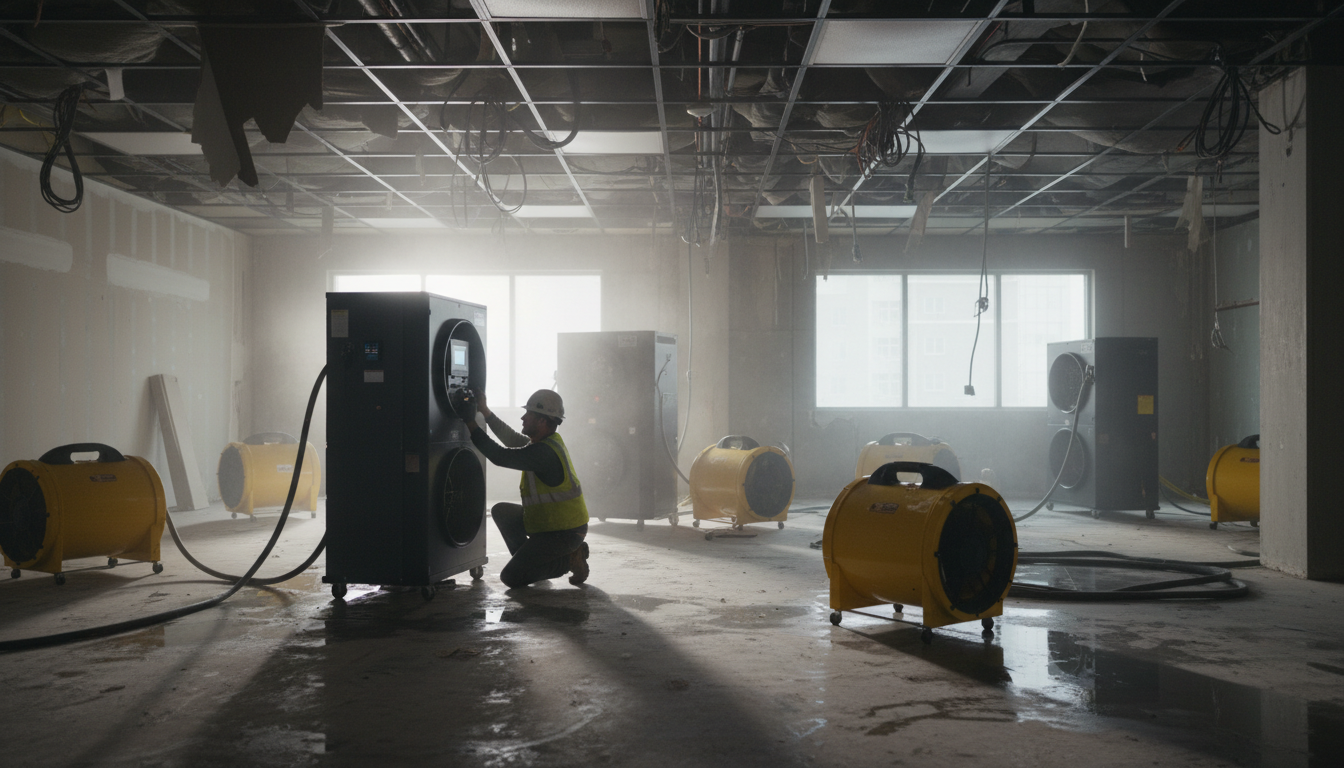
When the December clock is ticking, the temptation to crank the central heating to maximum is strong. However, force drying plaster with high heat is a mistake that often leads to surface cracking and delamination, where the finish coat separates from the backing. To manage how long after plastering before painting Edinburgh winter projects require, you must adopt a controlled, balanced approach to moisture removal.
Keep the room at a steady temperature of 18 to 20 degrees Celsius. This provides enough warmth to encourage evaporation without shocking the gypsum. Alongside consistent heat, a dehumidifier is your most effective tool. Position the unit in the center of the room rather than pointing the exhaust directly at a specific wall. This ensures even moisture extraction from the air throughout the space. If you concentrate the dry air on one area, that section will dry too quickly and likely hairline crack, while the rest of the room remains damp.
Ventilation is the final piece of the puzzle. Even during a cold spell in the Lothians, you should crack a window for two to three hours during the day. This allows the saturated, moisture heavy air to escape and be replaced by fresher air, which can then hold more moisture. Without this air exchange, the dehumidifier eventually struggles as the room becomes a sealed box of humidity. If you are managing a large renovation and need professional advice on environmental controls, get in touch with our team for guidance. Following these steps ensures the plaster cures naturally, providing a stable base for the festive decorating ahead.
The Christmas Mist Coat: Why you cannot skip this step
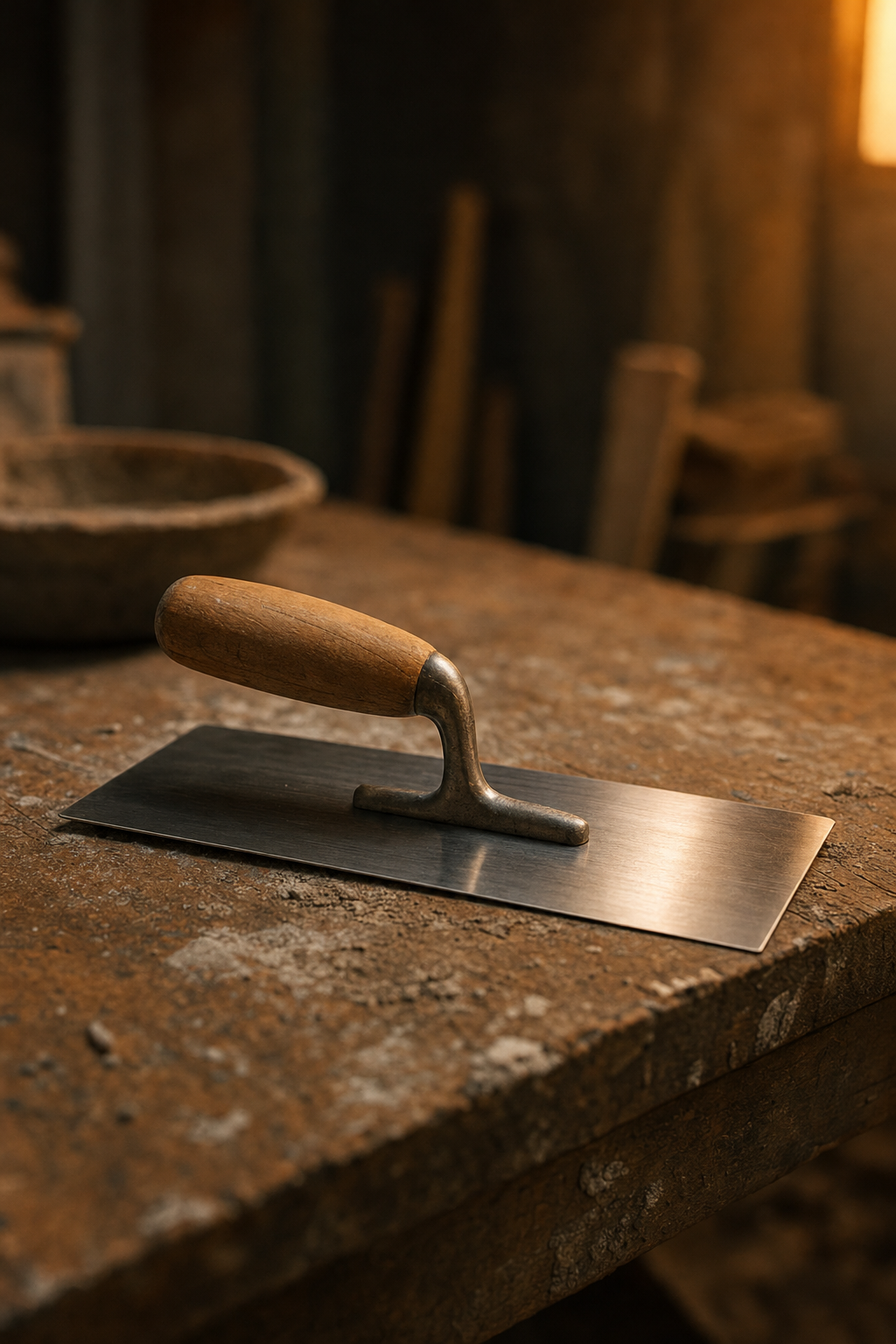
After waiting the necessary time for how long after plastering before painting Edinburgh winter conditions require, the mist coat is your most critical decorating step. This is a diluted layer of matte emulsion, typically mixed at a 70/30 or 60/40 paint to water ratio. It functions by penetrating the porous gypsum to create a permanent bond. Without it, the fresh plaster will suck the moisture from full strength paint too rapidly, leaving the pigment sitting loosely on the surface rather than becoming part of the wall.
Skipping this step to save a few hours before the Christmas festivities begin is a significant risk. When your living room eventually fills with guests and the heating is turned up, the sudden increase in ambient temperature and humidity can cause unbonded paint to bubble or peel off in large sheets. To ensure the work from your professional plastering services in Edinburgh remains intact long after the decorations come down, use a cheap matte emulsion for this base layer. If you need a reliable local plasterer to check the surface before you start, get in touch with our team to avoid a festive decorating disaster.
What happens if you paint too soon in damp conditions?
Applying a finish coat to damp walls creates a non-permeable seal over the gypsum. In the biting cold of an Edinburgh winter, this trapped moisture is prevented from evaporating and instead forced deeper into the substrate. As the water eventually attempts to exit, it pushes against the paint film, resulting in unsightly bubbling and localized flaking. If you ignore the professional advice on how long after plastering before painting Edinburgh winter conditions require, you risk 'efflorescence,' where mineral salts are leached from the building's masonry and form a white, crusty deposit beneath your new decor.
The most severe consequence is often hidden; moisture locked behind a paint layer in a cold room creates the ideal environment for mold growth. This biological activity can rot the bond between the plaster and the wall, leading to soft patches that eventually crumble. A reliable local plasterer will always advise patience because the cost of rectification far outweighs the benefit of finishing a few days early. Rather than hosting a perfect Christmas, you could face the frustration of scraping back ruined finishes in January. For peace of mind, get in touch with our team to ensure your walls are properly cured before proceeding.
Scheduling your winter plastering project in Edinburgh
Securing a slot for professional plastering services in Edinburgh requires foresight during the festive peak. To manage how long after plastering before painting Edinburgh winter timelines demand, aim for a booking no later than the third week of November. This provides the necessary two week buffer for a standard skim to cure fully before your final decorating push in mid December.
Disclose your specific deadlines during the initial site visit. A reliable local plasterer can suggest technical solutions, such as using fast setting patching compounds for electrical chases or specific bonding agents that help manage moisture in older tenements. These professional grade materials can shave critical days off the drying period. For a tailored schedule that respects the unique environmental conditions of a Scottish winter, get in touch with our team to plan your renovation before the holiday cutoff.