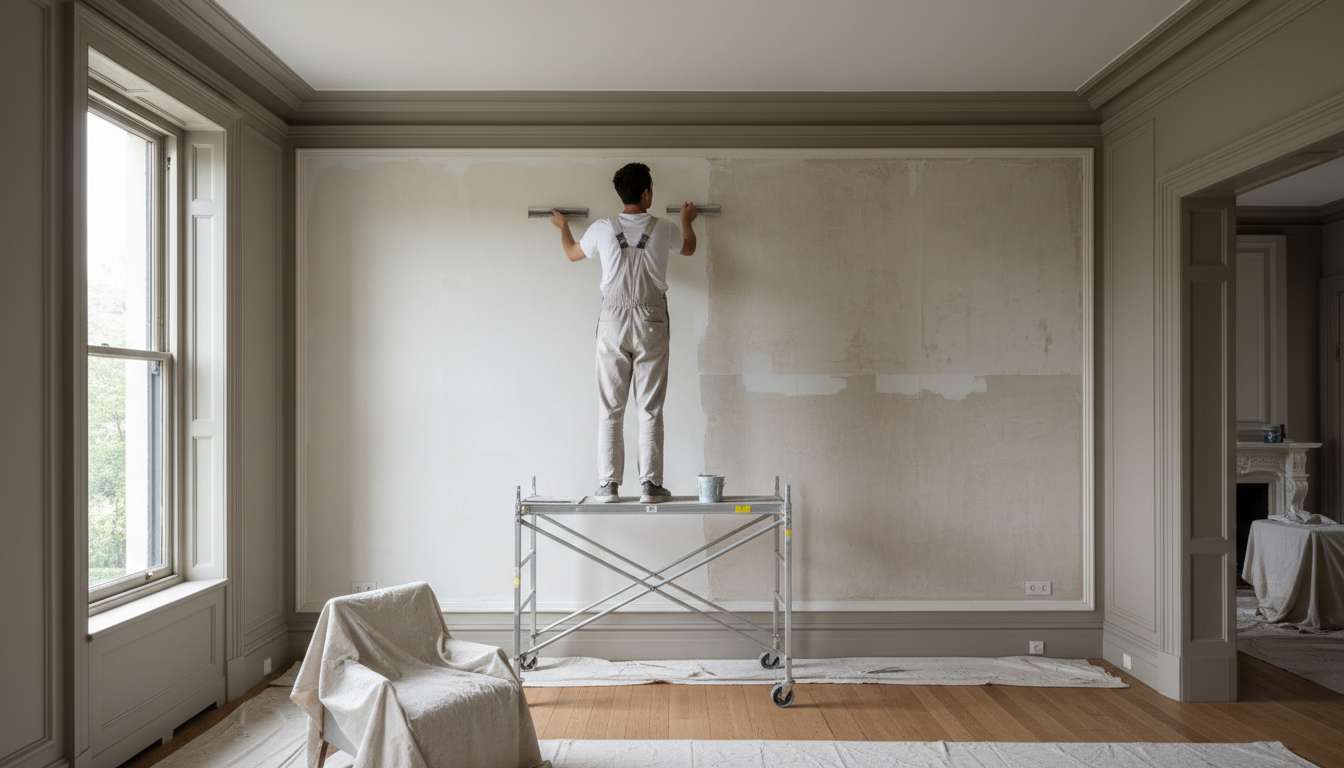
Professional Artex ceiling removal Edinburgh requires mandatory asbestos testing to determine whether the texture can be safely scraped away or should be covered with a smooth plaster skim. Costs depend on the size of the area and the presence of hazardous materials; therefore, hiring certified contractors is essential to ensure the project meets UK safety regulations.
Walking into a classic Edinburgh home only to be met by the sharp, dated swirls of an Artex ceiling is a common frustration for modern homeowners. These textured surfaces do more than just trap dust and age a room; they present a significant hurdle during renovations due to the historical use of asbestos. At PlasterTec Edinburgh, we understand that you want a smooth, contemporary finish without compromising your family's safety or your renovation budget. This guide provides a professional perspective on the realities of Artex management in the local market. You will learn how to identify asbestos risks, compare the costs of full removal against professional skimming, and understand your legal obligations when selling a property in Scotland. Achieving a flawless, modern interior starts with a clear plan for handling these challenging surfaces.
The Legacy of Artex in Edinburgh Homes: Why Textured Ceilings Are Everywhere
Walking into a property in Corstorphine, Leith, or Liberton, one often encounters the distinctive swirls and stipple patterns of Artex. This textured coating became the standard for Scottish interior design between the 1970s and the late 1990s, offering a quick, decorative way to mask imperfections in newly installed plasterboard. It stands in stark contrast to the traditional lime plaster and ornate cornicing found in Edinburgh’s Victorian tenements, where smooth, flat finishes were a mark of original craftsmanship.
For decades, these patterns were a deliberate design choice, yet today they represent a significant hurdle for homeowners seeking a contemporary, minimalist aesthetic. The heavy textures trap dust and create harsh shadows that make rooms feel smaller and dated. Consequently, Artex ceiling removal Edinburgh has become one of our most requested services as residents look to modernize their living spaces. While these coatings served a practical purpose during the post-war housing boom, they are now viewed as a barrier to the clean, light-reflective finishes achieved through professional plastering services in Edinburgh.
If you are planning a renovation in a development from this era, understanding this architectural legacy is essential. Before you begin any work, we recommend you contact our team to discuss the age of your property and the safest approach to achieving a smooth, modern finish.
The Asbestos Question: Is the Worry Overblown?
Homeowners across Edinburgh often ask, "is my artex ceiling safe asbestos?" It is a valid concern, but the answer requires nuance rather than alarm. While the UK fully banned asbestos in 1999, many textured coatings applied before 2000 contain chrysotile, commonly known as white asbestos. However, the actual concentration within the Artex matrix is remarkably low. According to HSE figures, trade-use coatings typically contained between 2 percent and 5 percent asbestos fibers.
The key to safety lies in the material's bonded nature. In its original state, the asbestos fibers are securely locked within the hard, plaster like matrix of the coating. As long as the ceiling remains intact and undisturbed, it poses no significant risk to your health. The danger only arises when the material is manipulated in a way that releases these microscopic fibers into the air. This happens through aggressive actions like sanding, drilling, or scraping, which is why DIY Artex ceiling removal is highly discouraged without a proper assessment.
Material Aspect | Detail |
|---|---|
Asbestos Type | Chrysotile (White Asbestos) |
Typical Concentration | 2% to 5% |
UK Ban Date | November 1999 |
Risk Status | Low if bonded and undisturbed |
From a professional perspective, the presence of asbestos does not mean your home is a hazard to inhabit. It does, however, dictate how we approach your renovation. If your property was built or renovated during the peak Artex era, we treat the surface with necessary caution. Instead of dry sanding, which creates hazardous dust, our professional plastering services in Edinburgh focus on methods that encapsulate the material or remove it using controlled techniques. You cannot identify asbestos by sight alone; even the most experienced plasterer requires a lab test for definitive proof. If you are concerned about a specific room in your home, you should contact our team to discuss testing options before you begin any decorating projects that might disturb the surface.
Artex Ceiling Removal Edinburgh: Skimming vs. Full Removal
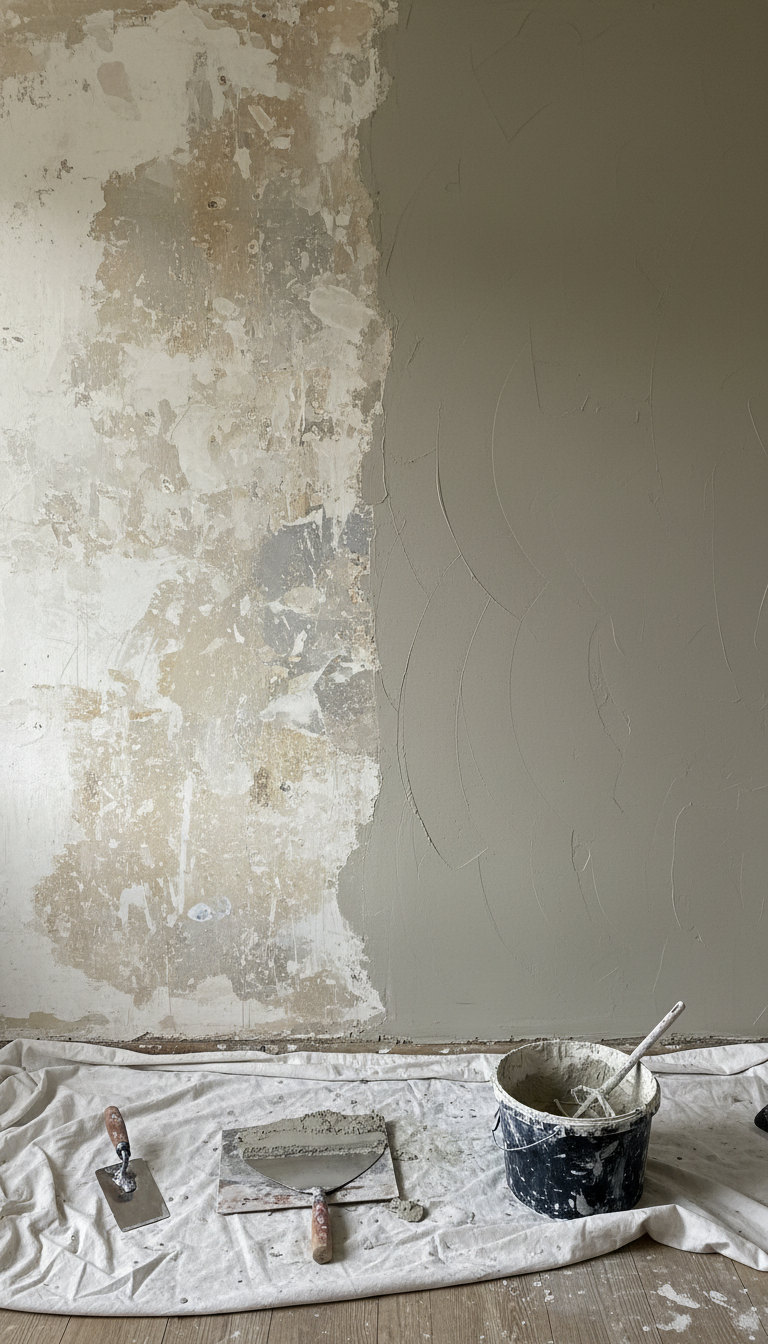
Deciding between full removal and skimming is the most critical technical choice when modernizing a textured ceiling. While both methods result in a smooth finish, the physical process and safety implications differ significantly. Understanding these differences is vital for Edinburgh homeowners, particularly when dealing with properties built during the peak Artex era.
Full removal involves applying specialized chemical gels or using steam to soften the decorative coating before scraping it back to the original plasterboard or lath and plaster. This process is inherently messy, often producing a heavy slurry that requires significant protection of flooring and furniture. More importantly, if the coating contains asbestos, the act of scraping carries a higher risk of liberating fibers if the material is not handled with extreme care under controlled conditions. Removing the material entirely also necessitates the safe disposal of hazardous waste, which can escalate project timelines.
Feature | Full Removal | Skimming (Encapsulation) |
|---|---|---|
Process | Chemical stripping or steaming | Over-plastering existing texture |
Mess Level | High (slurry and scrapings) | Moderate (standard plastering) |
Safety | Potential fiber release if scraped | Fibers sealed behind new plaster |
Cost | Higher due to labor and disposal | More cost-effective for most rooms |
In contrast, skimming is the preferred approach for our professional plastering services in Edinburgh. Technically referred to as encapsulation, this method involves preparing the existing Artex and applying multi-coat plaster systems to create a perfectly flat surface. This technique is often the most sensible Artex ceiling removal Edinburgh solution because it bypasses the labor-intensive scraping process. By sealing the textured coating beneath a fresh layer of durable plaster, you create a permanent physical barrier that keeps any potential asbestos fibers dormant and undisturbed. If you are unsure which path is right for your home, contact our team to discuss the specific condition of your ceilings.
The Process of Skimming Over Artex: A Professional Step by Step
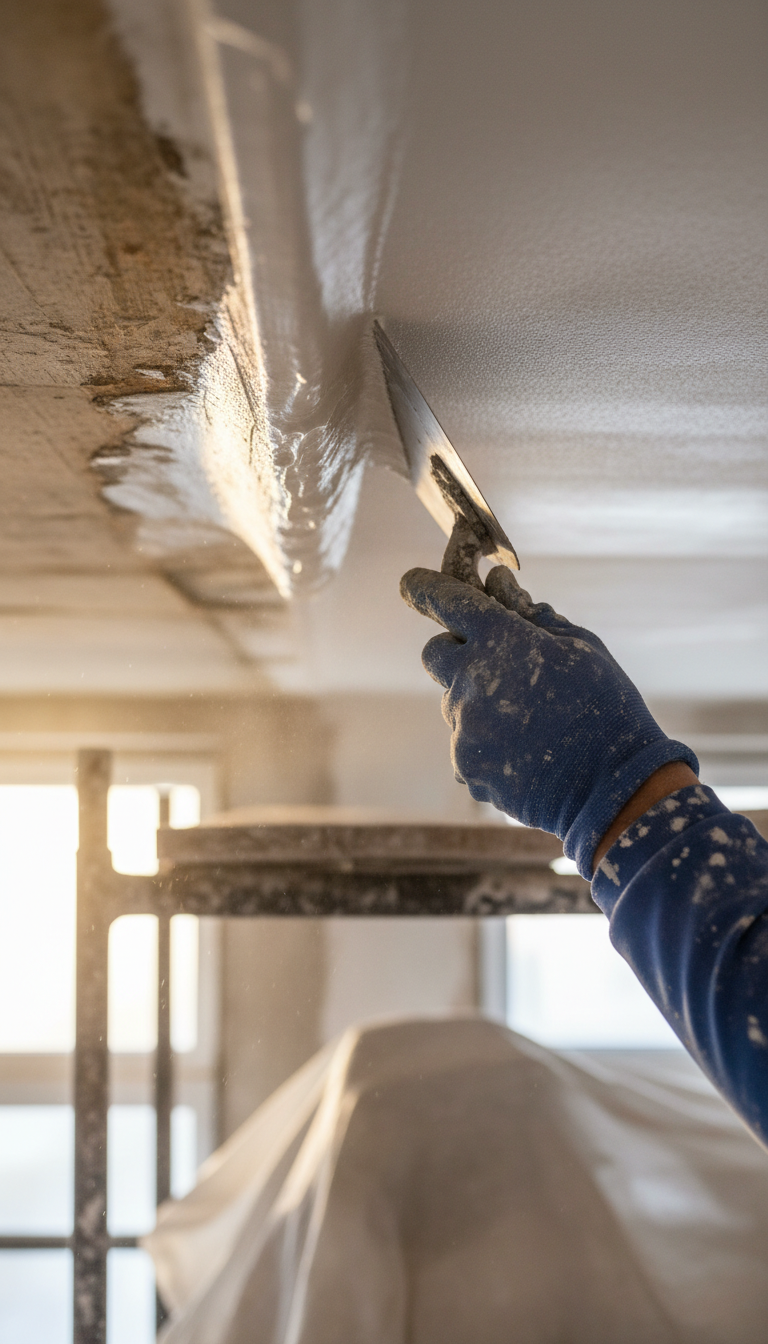
Skimming is a precise technical exercise that demands more than just a standard plastering application. The goal is to achieve a flat, durable surface while ensuring the existing Artex remains stable and encapsulated.
The process begins with surface preparation. If the Artex features aggressive stipple or high peaks, these must be reduced to create a more manageable profile. To maintain safety, we utilize wet methods, lightly misting the ceiling before using a wide scraper to knock back the highest points. This prevents the liberation of dust and is a standard precaution in Artex ceiling removal Edinburgh projects where the age of the property suggests a risk.
Step | Technical Requirement | Purpose |
|---|---|---|
Preparation | Wet scraping high peaks | Reduces profile without creating dust |
Priming | Bonding agents (e.g., Blue Grit) | Creates a mechanical key on non-porous surfaces |
Base Coat | Thicker plaster application | Levels the depth of the remaining texture |
Finish Coat | Fine skimming | Produces the final smooth, light-reflective surface |
Selecting the correct bonding agent is the most critical stage. Because many textured ceilings have been painted with non-porous silk paints, standard plaster will not adhere effectively. We apply high-grip bonding agents like Blue Grit, which contains sand-like aggregates to provide a physical grip, or specialized PVA solutions for less challenging surfaces.
Failure to assess the bond between the original Artex and the underlying plasterboard can lead to "blowing," where the weight of the new plaster causes the old layers to delaminate and sag. If you notice hollow sounds when tapping your ceiling, contact our team for a professional assessment before proceeding. Our professional plastering services in Edinburgh focus on a multi-coat system, ensuring each layer is timed perfectly to prevent shrinkage cracks and ensure a perfectly level finish.
Artex Ceiling Removal Cost: What Edinburgh Homeowners Should Expect

Budgeting for a ceiling renovation requires a clear understanding of the two distinct paths available. Based on current artex ceiling removal cost uk data, skimming is significantly more economical than licensed removal, though prices in Edinburgh vary based on property type. For a standard 12 square meter room, professional skimming typically ranges from £400 to £700. This includes preparation, bonding, and multi-coat finishing. In contrast, licensed asbestos removal for the same space can easily exceed £1,500, especially when factoring in specialized disposal fees and air monitoring.
Several variables influence the final quote for Artex ceiling removal Edinburgh. High ceilings, particularly in Victorian tenements, require additional scaffolding and time. Similarly, a heavy popcorn texture requires more intensive wet-scraping and more plaster to level out compared to a light stipple.
Service Type | Estimated Cost (Standard Room) | Primary Cost Drivers |
|---|---|---|
Professional Skimming | £400 to £700 | Prep time, bonding agents, ceiling height |
Licensed Asbestos Removal | £1,200 to £2,500+ | Waste disposal, air testing, PPE |
Full Boarding & Skimming | £600 to £900 | Material costs, structural integrity |
While skimming is the cost-effective choice, it demands a higher technical skill level than standard plastering. The plasterer must compensate for the uneven substrate to ensure the final result is perfectly flat and light-reflective. For an accurate quote tailored to your home’s specific dimensions, contact our team to arrange a site visit. Our professional plastering services in Edinburgh ensure that these complexities are managed safely and efficiently.
Selling a House with Artex in Scotland: Do You Have to Declare It?
In Scotland, the Home Report system makes transparency regarding textured coatings a necessity rather than a choice. Surveyors conducting a Single Survey will typically flag Artex under the 'Ceilings' category, often noting that the material could contain asbestos if the property predates 2000. While you are not legally required to remove Artex before a sale, its presence is documented for prospective buyers to review.
Home Report Component | Typical Surveyor Action |
|---|---|
Single Survey | Flags textured coatings as a potential asbestos risk |
Property Questionnaire | Sellers must disclose known asbestos presence |
Mortgage Valuation | May highlight Artex as a factor for future repair costs |
In the competitive Edinburgh property market, modern buyers often view textured ceilings as a significant deterrent. Many see it as a hidden renovation cost or a safety hurdle, which can lead to lower offers or cautious bidding. Investing in professional plastering services in Edinburgh to achieve a flat, contemporary finish removes this psychological barrier. If you are preparing to list your home, contact our team to discuss how Artex ceiling removal Edinburgh through professional skimming can increase your property's appeal and facilitate a faster, smoother sale.
Safety First: How to Get Your Ceiling Tested in Edinburgh
Before beginning any Artex ceiling removal project in a property built before 2000, verifying the material's composition is a mandatory safety step. Because you cannot identify chrysotile asbestos by sight alone, you must engage a UKAS accredited laboratory for analysis. Local Edinburgh residents can often find testing facilities in areas like Seafield or Sighthill, or utilize reputable postal sampling kits that provide a formal certificate of analysis.
If you choose to collect a sample yourself, you must follow strict safety protocols. Always use a hand-pumped sprayer to dampen the area with water and a small amount of detergent first; this prevents fibers from becoming airborne during the process. Carefully remove a small section, approximately the size of a coin, ensuring you include the underlying plasterboard or lath. Place this sample in a sealable polythene bag, then place that bag inside a second one to ensure complete containment.
Testing Phase | Requirement |
|---|---|
Sampling Method | Wet method only; strictly no power tools |
Containment | Double bagged in heavy duty polythene |
Laboratory Type | UKAS accredited facility |
Documentation | Official Certificate of Analysis |
PlasterTec Edinburgh prioritizes the health of our clients and staff. We will always advise professional testing if the property's construction date suggests a potential risk. If you are unsure how to proceed with a survey, contact our team for guidance. Ensuring safety at this stage allows our professional plastering services in Edinburgh to proceed with the correct methodology and equipment for a flawless finish.
Updating your home starts with addressing outdated surfaces safely. While modernizing your ceilings can significantly improve your property value and aesthetic, it is essential to prioritize health by identifying potential asbestos risks before any work begins. If you would prefer the peace of mind that comes with expert assistance, our team can guide you through the entire process. For those looking for a clean and professional finish, our Artex Removal services offer a safe and efficient way to transform your space without the stress of doing it yourself.