
Assessing whether to keep, repair, or replace coving Edinburgh depends on the structural integrity, the depth of existing detail, and the presence of significant water damage. Original plasterwork should be preserved whenever possible to maintain property value; however, extensive crumbling or loss of pattern often requires professional restoration or bespoke replacement. Expert plasterers can determine if historical features are salvageable or if modern replicas are needed to restore the period character of the home.
Walking into an Edinburgh tenement only to find cracked, sagging, or heavily obscured cornice work can be deeply frustrating for any homeowner. These intricate details often represent the soul of a period property; however, years of neglect or amateur repairs leave many wondering if their original coving is a lost cause. Maintaining these architectural features is about more than just aesthetics. It is fundamentally about preserving the historical value and character of your home. In this guide, PlasterTec Edinburgh provides an expert perspective on the restoration process. You will learn how to identify authentic plasterwork, assess when damage warrants a full replacement, and compare modern materials against traditional techniques. We also break down the practicalities of local restoration costs and safety concerns, ensuring you have the specific knowledge needed to revive your ceiling’s heritage correctly.
The Architectural Importance of Coving in Edinburgh Homes
Edinburgh is defined by its stone facades and the grand proportions of its interior spaces. In the Georgian terraces of the New Town and the towering Victorian tenements of Marchmont and Bruntsfield, high ceilings were designed to showcase craftsmanship. Within these spaces, the plasterwork at the wall-to-ceiling junction serves as a vital transition, drawing the eye upward and grounding the room's proportions.
Homeowners often seek coving Edinburgh specialists because these features are integral to a property's market value. Authentic plasterwork preserves the historic character that makes the city's housing stock so desirable. While residents frequently use the terms interchangeably, there is a technical distinction. Coving generally refers to a simpler, uniform 'C' shaped profile that rounds off the corner. In contrast, a cornice is typically more ornate, featuring complex layers, floral motifs, or dental patterns that define the period's specific style.
Maintaining these features requires an understanding of traditional building methods. Engaging professional plastering services ensures that the weight and detail of traditional lime or fibrous plaster are respected. A local Edinburgh plasterer recognizes that in a 19th-century flat, the cornice is more than a decoration; it is a structural signature of the home's heritage.
How to Identify Original Plaster Coving in a Tenement Flat
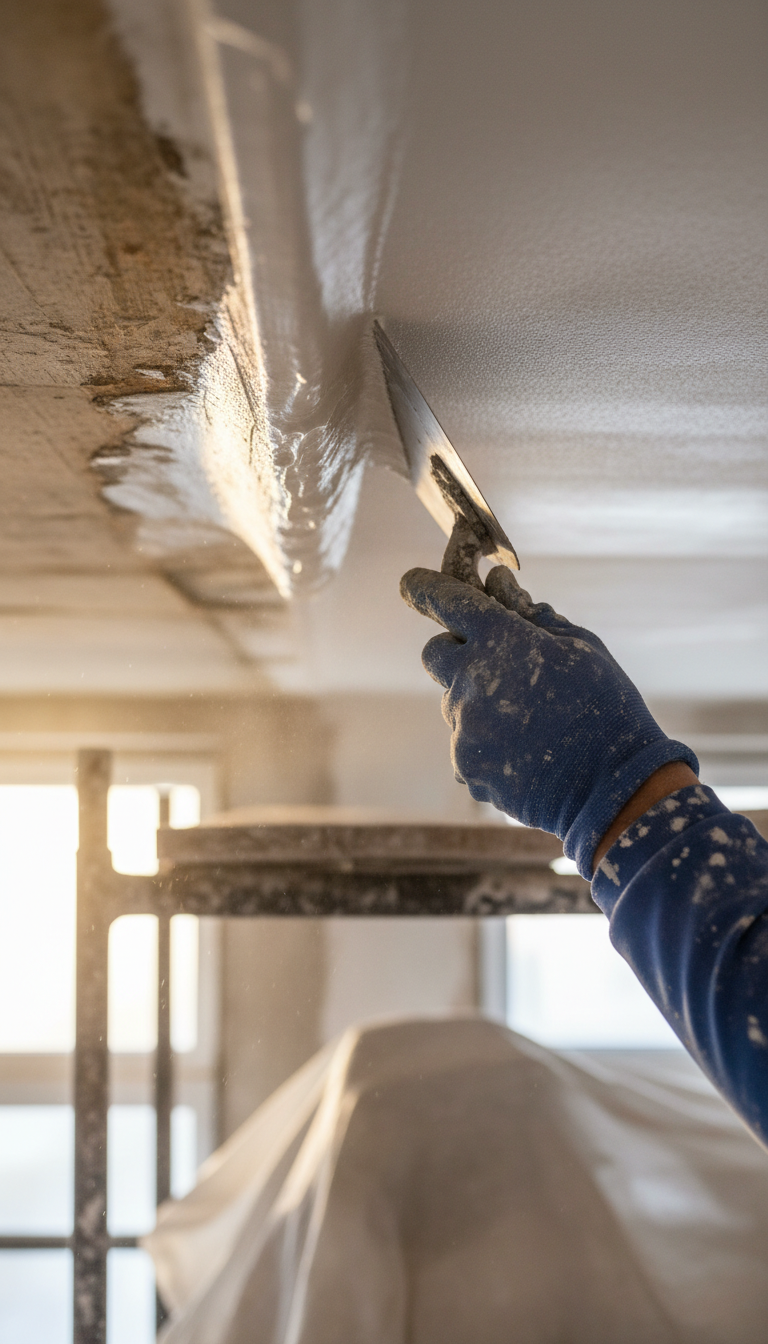
Determining if your plasterwork is an original feature or a modern imitation is the first step in any renovation project. In many Edinburgh tenements, original lime plaster coving has endured for over a century, acquiring a distinct character that modern materials cannot replicate. When assessing coving Edinburgh homeowners should look closely for a specific visual "softness." This rounded-off appearance in the details is caused by decades of paint layers filling the intricate crevices of floral or dental patterns. A modern addition will typically have unnaturally sharp, crisp edges that look too clinical for a historic property.
The "tap test" provides immediate physical feedback. Gently rap your knuckles against the profile. A hollow, drum-like sound suggests a lightweight polyurethane or polystyrene material. Authentic lime or fibrous plaster sounds dense and solid, mirroring the weight of the masonry walls it adheres to. Consistency within the building is another reliable indicator. Edinburgh tenements were usually finished with uniform plaster designs throughout the stairwell. If your flat features a simple 'C' profile while the neighbor above has ornate fluting, your coving is likely a later, lower-quality replacement.
Period | Typical Characteristics |
|---|---|
Victorian | Highly ornate; featuring floral motifs, acanthus leaves, egg-and-dart, or dental patterns. |
1930s | Simpler, geometric profiles; often using stepped edges or clean, linear Art Deco styles. |
A local Edinburgh plasterer can help you verify these findings during a site visit. If the coving appears original but is obscured by thick paint, professional plastering services can assess if the detail is salvageable through specialist stripping or if a template needs to be taken for replication.
Is Your Coving Worth Keeping? Assessing the Damage
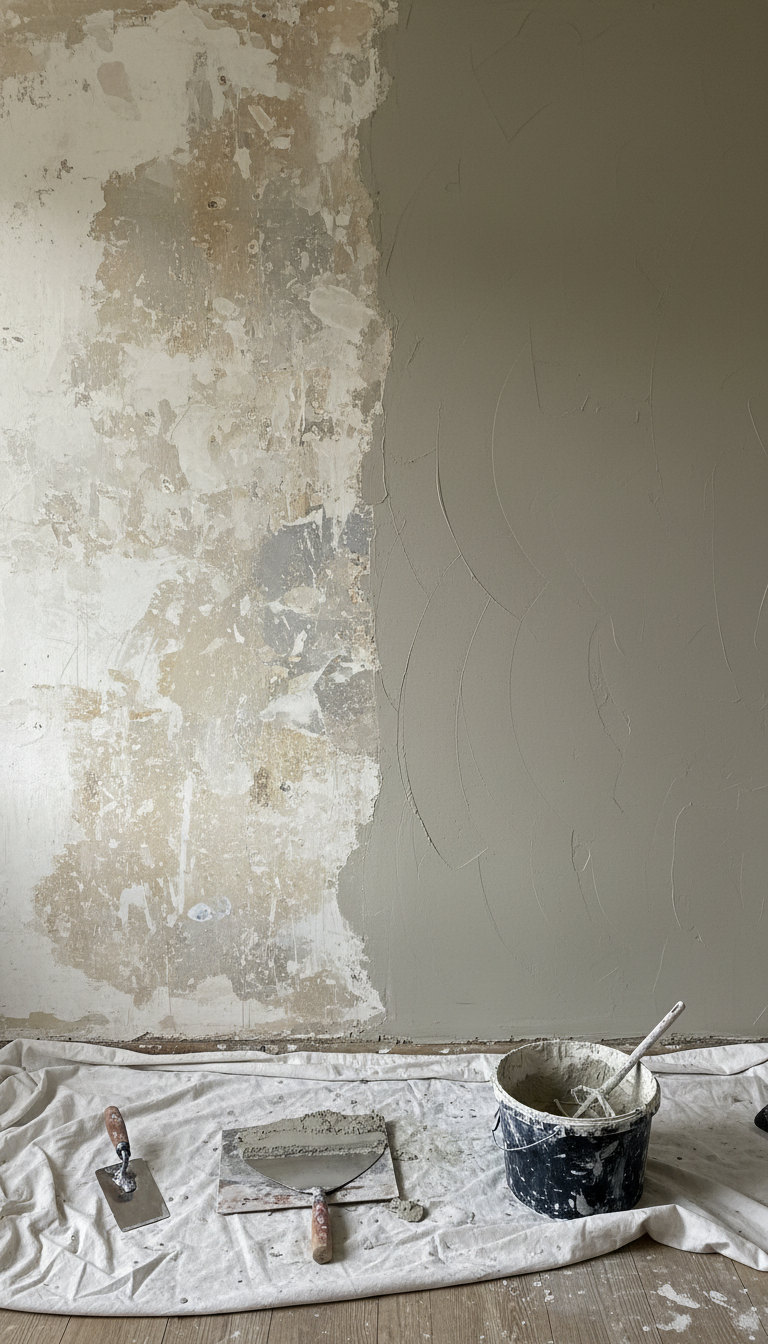
Once you have identified your plasterwork as an original feature, the next step is a rigorous structural assessment. In Edinburgh's stone tenements, the age of the building and the history of its maintenance will dictate whether a restoration is viable or if replacement is the safer, more cost-effective route. The weight of traditional fibrous plaster is substantial; if the bond between the cornice and the lath and plaster ceiling has failed, the feature becomes a safety hazard.
Use the following checklist to evaluate the condition of your coving Edinburgh:
Visible Staining: Yellow or brown watermarks usually indicate an active or historic leak from the flat above. If the plaster feels soft or crumbly to the touch, the internal structure is compromised.
Structural Gaps: Look for daylight or significant gaps between the top of the cornice and the ceiling. This suggests the plaster is 'blown' and is no longer secured to the timber laths.
Loss of Definition: If the intricate floral or dental patterns look like blobs, they are likely clogged with a century of lead-based paint. While this can be stripped, it is a labor-intensive process.
Cracking Patterns: Vertical cracks at the corners are common results of tenement settlement, whereas long horizontal cracks along the wall line suggest the wall itself is moving or the plaster is failing.
Damage Type | Visual Cue | Recommended Action |
|---|---|---|
Hairline Crack | Fine, spider-web lines in the paint | Simple fill and sand during professional plastering services. |
Blown Plaster | Cornice pulling away from the ceiling | Potential removal or specialist re-securing by a local Edinburgh plasterer. |
Water Saturation | Bubbling paint, soft texture, dark stains | Must be dried and treated; often requires replacement of the affected section. |
Homeowners should also be cautious of mid-century renovations. During the 1960s and 70s, it was common to apply textured coatings to ceilings. If your coving is bordered by a stippled or swirled pattern, you may need Artex ceiling removal before addressing the cornice. These textures often contain white asbestos, and disturbing them without professional testing can release hazardous fibers into your living space. If you suspect your coving has been modified or covered by later additions, always consult an expert before attempting a DIY repair.
Comparing Materials: Plaster Coving vs Polystyrene and Polyurethane
Once you have determined that your existing plasterwork is beyond repair, the choice of replacement material becomes the most significant factor in your restoration. Selecting the right material impacts both the visual authenticity and the long-term market value of your property. For homeowners seeking coving Edinburgh residents can trust to last, the distinction between traditional plaster and modern synthetic alternatives is stark.
Polystyrene coving is widely available in retail DIY stores, but it is fundamentally unsuitable for the architectural standards of a traditional Edinburgh home. Beyond its flimsy appearance and visible grain, it presents a significant fire hazard and can actually devalue a heritage property by signaling a lack of care in restoration. Even high-density polymers like Duropolymer or polyurethane, while more durable, often lack the physical weight and thermal expansion properties required to integrate seamlessly with stone walls and lath ceilings.
Material | Durability | Aesthetic Quality | Suitability for Period Homes |
|---|---|---|---|
Fibrous Plaster | High | Excellent; seamless finish | Highly Recommended |
Polyurethane | Medium | Good detail; synthetic feel | Acceptable for modern builds |
Polystyrene | Low | Poor; grainy and visible joins | Not Recommended; fire hazard |
SuperCove | Medium | Smooth; limited profiles | Only for newer properties |
Traditional fibrous plaster remains the only authentic option for a flawless, seamless finish. It allows a local Edinburgh plasterer to sand and fill joints so they become completely invisible, mirroring the original construction of the room. While products like SuperCove provide a sensible middle ground for post-war builds due to their paper-faced finish, they lack the profile depth needed for Victorian restorations. To ensure your new installation meets the historic standards of your home, engaging professional plastering services is the best way to guarantee the materials used are as enduring as the building itself.
The Cost of Coving Edinburgh: Repair vs Replacement
Estimating the financial investment for coving Edinburgh involves weighing the labor of restoration against the cost of new installation. While general market data suggests average costs for standard runs range from £233 to £529, period properties in the New Town or Marchmont often require more specialized attention. Restoration costs fluctuate based on whether a professional is stripping away centuries of paint to reveal original details or performing a squeeze to clone a unique profile for a bespoke replacement.
Stripping an ornate Victorian cornice is a meticulous, time consuming process. In many cases, it is more cost effective to have a local Edinburgh plasterer cut out damaged sections and install fresh plaster casts that match the existing pattern exactly. This approach ensures structural integrity without losing the home's historic character.
Service Type | Typical Cost Range | Primary Factor |
|---|---|---|
Standard Coving Install | £230 – £550 | Room size and profile complexity |
Cornice Restoration | £600+ | Labor for paint removal or patching |
Bespoke Cloning | Premium Pricing | Custom mold creation and casting |
Achieving a flawless finish in older tenements is notoriously difficult because rooms are rarely perfectly square. Engaging professional plastering services is essential for precision mitring at the corners and ensures that joints are blended invisibly. Professional tools and experience with wet plaster prevent the obvious seams and misaligned patterns that often plague DIY attempts in historic settings.
Finding a Local Plasterer for Cornice Restoration in Edinburgh
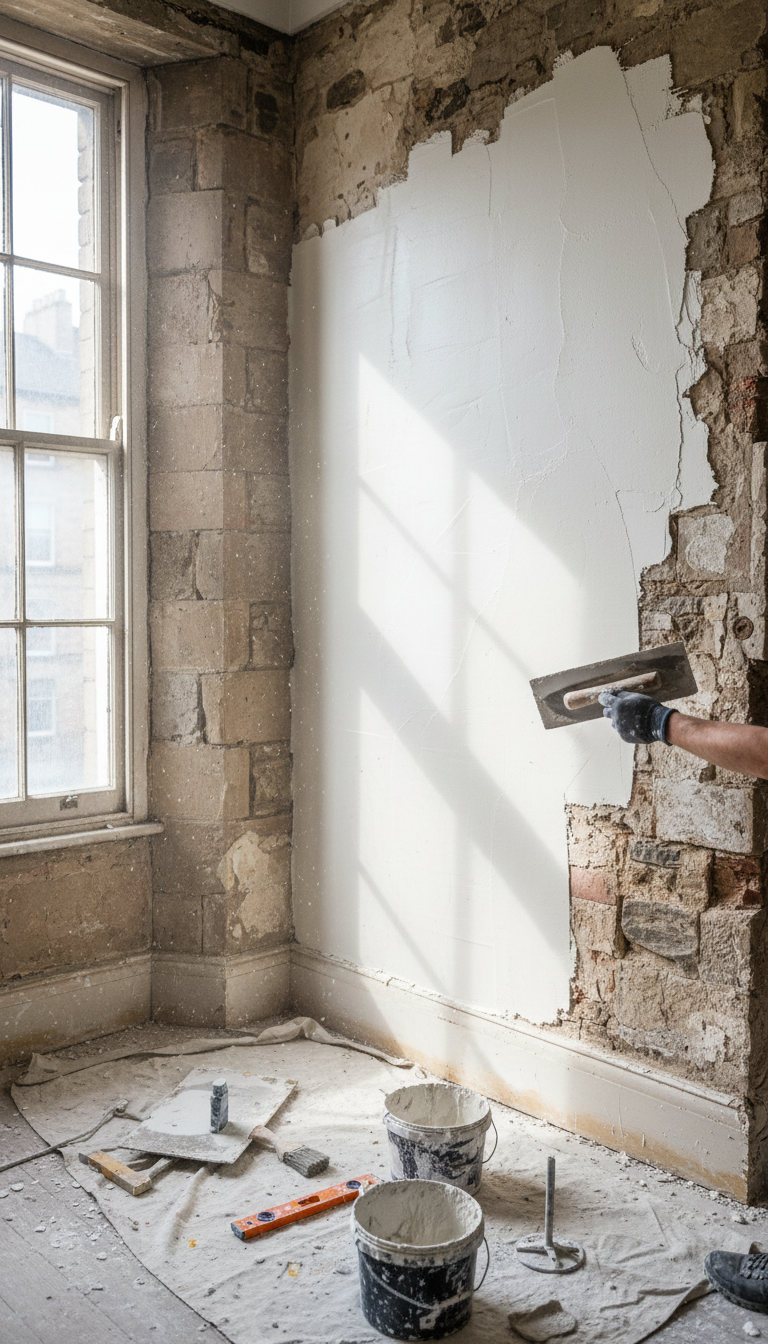
Selecting a specialist for cornice work requires finding someone who respects the nuances of Edinburgh's architectural history. A local Edinburgh plasterer brings essential knowledge of traditional building methods, particularly the behavior of lath and plaster ceilings found in Victorian and Georgian properties. These historic ceilings possess a degree of flexibility and weight that modern plasterboard lacks, meaning new installations must be secured to timber joists with specific fixings to prevent future sagging or cracking.
When interviewing tradespeople for your project, prioritize those who offer a comprehensive 'supply and fit' service. Ask specifically if they have the capability to match existing profiles. For homeowners dealing with damaged sections of original coving Edinburgh specialists should be able to take a 'squeeze' or template of the current design to cast an identical replacement in their workshop. This level of bespoke service ensures that restoration work remains indistinguishable from the original 19th-century craftsmanship.
While lightweight DIY alternatives are sold in hardware stores, achieving a flawless finish in a room that is rarely perfectly square is a significant challenge. Professional installers utilize specialized mitre blocks and fine-grade wet plaster to blend joints invisibly, a task that requires years of experience to master. Engaging professional plastering services guarantees that the heavy fibrous sections are safely installed and that every corner transition is sharp, preserving the elegant lines that define Edinburgh’s most prestigious interiors.
Common Coving Questions: From Asbestos to Adhesives
Addressing technical concerns helps ensure a successful renovation. A frequent question involves the feasibility of installing new materials over old ones. You should never put new coving over existing coving. The cumulative weight of multiple layers often leads to structural failure, especially in Edinburgh’s older lath and plaster systems; furthermore, the resulting projection looks bulky and ruins the room's proportions.
Safety regarding asbestos is another priority. While authentic lime and gypsum plaster rarely contain asbestos, decorative finishes or adhesives applied during the 1960s and 1970s often do. If you discover a textured coating near your plasterwork, seek Artex ceiling removal experts for testing before starting work.
Matching a unique profile requires a process called taking a squeeze. A local Edinburgh plasterer uses a profile gauge or fresh plaster to create a negative mold of the original section. This template allows for the creation of bespoke casts in a workshop. For those seeking professional plastering services, this method ensures a seamless match for coving Edinburgh properties, maintaining the architectural continuity of the space without requiring a full replacement of the entire room's cornice.
Preserving the historical charm of an Edinburgh period home often starts with its intricate ceiling details. Whether you decide to carefully restore your original cornice or opt for a full replacement, the result will undoubtedly breathe new life into your living space. Deciding on the best course of action can be complex, especially when dealing with fragile materials. If you want expert help to ensure a seamless finish, our team offers specialized plastering services tailored to traditional properties across the city.