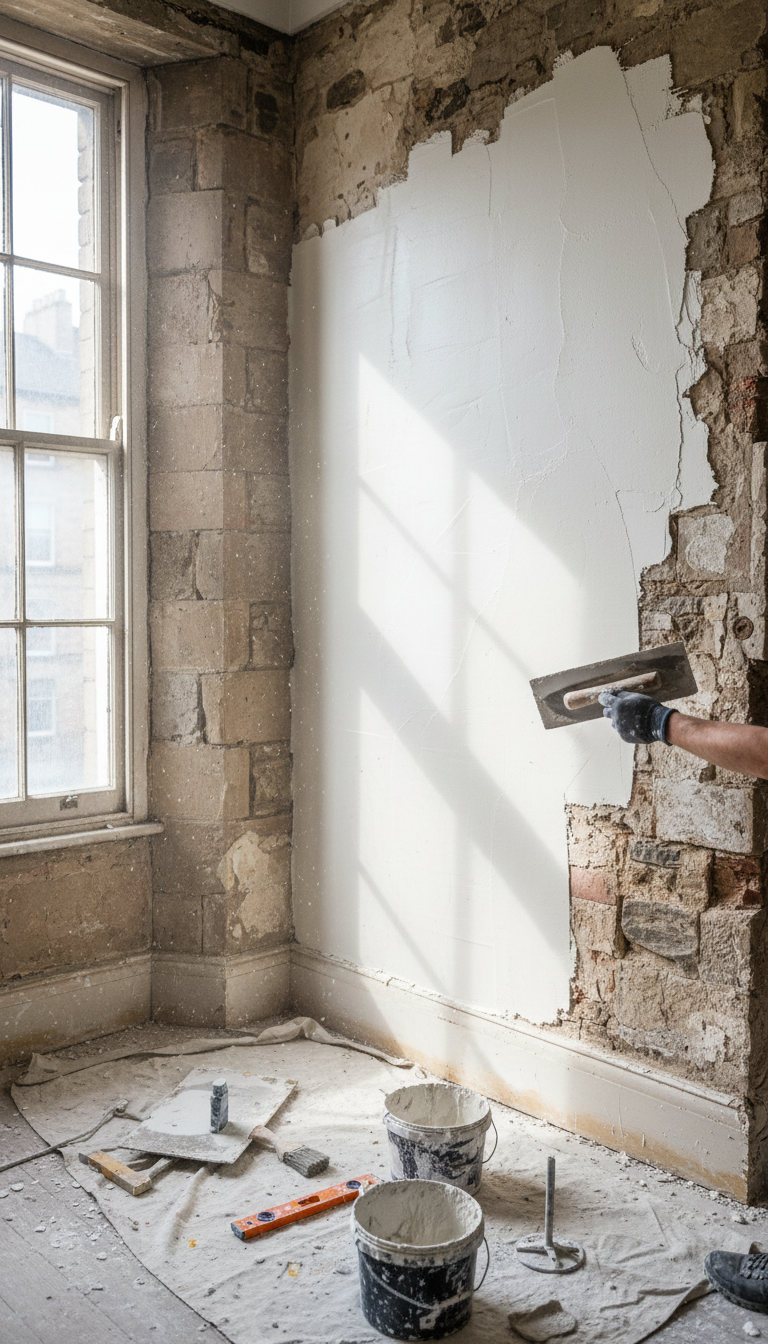
Skimming vs replastering Edinburgh depends on your wall's condition; choose skimming for minor surface smoothing and replastering for structural damage or crumbling original layers. Skimming applies a thin finishing coat to create a professional polish, whereas a full replaster provides a new, deep foundation for severely worn surfaces.
Staring at a hairline crack in your Marchmont flat or crumbling stone in a New Town basement can be incredibly frustrating. Homeowners across Edinburgh often struggle to determine whether their walls require a simple surface refresh or a complete structural overhaul. Choosing the wrong path is a costly mistake; applying a thin skim coat over failing Victorian plaster only masks deeper issues that will inevitably resurface. At PlasterTec, we believe that understanding the substrate of your property is the key to a lasting finish. This guide examines the technical differences between a cosmetic skim and a full replaster. We will explain how to diagnose the condition of your specific Edinburgh tenement walls, evaluate the disruption levels of each process, and provide a clear framework to help you invest your renovation budget wisely.
Understanding the Core Difference Between Skimming and Replastering
Homeowners in the city often use the terms interchangeably, but for a local Edinburgh plasterer, skimming and replastering represent two distinct levels of intervention. Skimming is a surface level finishing technique. It involves applying a thin layer of finishing plaster, typically only 2 to 3mm thick, over a substrate that is already structurally sound. This is the ideal solution for smoothing out minor imperfections, covering old wallpaper scarring, or finishing new plasterboard in a modern apartment.
Replastering is a comprehensive structural renovation. This process requires stripping the wall back to its original state, whether that is the solid stone masonry of a Georgian tenement or the timber laths of a Victorian terrace. We then rebuild the wall using a multi coat system, often reaching a total thickness of 10 to 20mm. This includes a robust base coat to level the substrate followed by a top skim to provide the final finish.
In Edinburgh, the choice often depends on your property type. Modern stud partitions usually only require a skim to refresh the aesthetic finish. However, older stone walls with crumbling lime or debonded base coats require a full replaster to ensure the new surface stays permanently attached. Understanding these technical differences is the first step toward achieving high quality professional plastering in Edinburgh.
The Edinburgh Tenement Test: How to Diagnose Your Walls
Determining if your walls require a simple refresh or a full restoration starts with a hands-on inspection. In traditional Edinburgh properties, the most reliable diagnostic tool is the tap test. Gently knock your knuckles against several points across the wall, especially near areas with visible damage. A solid, dense thud indicates that the original plaster remains firmly keyed to the underlying stone or brickwork. If you hear a hollow, drumming sound, the plaster has blown. This means the bond has failed, creating a small air gap between the plaster and the substrate. Skimming over blown plaster is a temporary fix that usually results in the new finish cracking or falling away within months.
Visual cues also tell a specific story in Victorian and Georgian homes. Look closely at any existing cracks. Random, spiderweb-like hairline fractures are often just surface shrinkage in the top coat and can usually be resolved with skimming. However, long, perfectly straight cracks often follow the lines of timber laths. If these cracks are accompanied by a visible bulge or sag, the internal structure is likely failing.
When weighing up skimming vs replastering Edinburgh homeowners should also check for movement in ceilings. A ceiling that moves or feels bouncy when pressed indicates that the plaster has detached from the laths, a common issue in older tenements due to historic vibrations or moisture. In these cases, a local Edinburgh plasterer will typically recommend stripping back to the lath rather than risking the weight of a new skim coat on a failing foundation. Checking these structural indicators first ensures your investment in professional plastering in Edinburgh lasts for decades rather than just a few seasons.
When a Skim Coat is Enough for Your Edinburgh Home
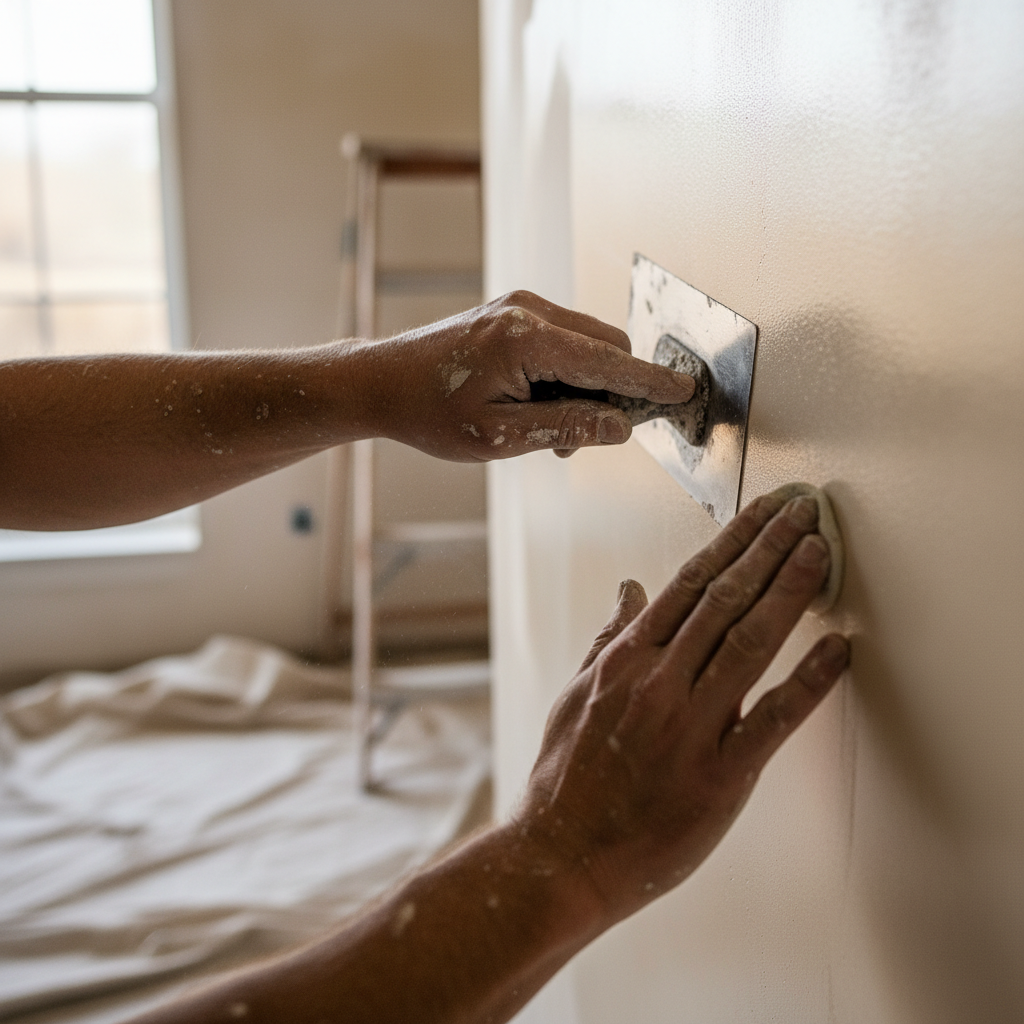
Once you have confirmed that your walls are structurally sound and have passed the diagnostic tests mentioned previously, you can often opt for a less invasive approach. Choosing a skim coat rather than a full renovation is an excellent way to save on both labor and material costs. This technique is particularly effective for modernizing rooms that are aesthetically tired but fundamentally healthy, allowing you to achieve a glass-like finish without the disruption of a full strip-back.
Common scenarios where skimming is the correct choice include: - Repairing surface scarring and gouges left behind after removing heavy, historic wallpaper or woodchip. - Smoothing over new plasterboard installed during loft conversions or when creating new internal partitions in a modern apartment. - Refreshing rooms with decades of built-up paint layers to create a flat surface suitable for high-end, light-sensitive finishes.
Clients frequently ask if it is possible to skim over old plaster. The answer is yes, but the underlying bond must be perfect. A local Edinburgh plasterer will prepare these surfaces with specialized bonding agents or PVA primers to ensure the new wet plaster adheres to the dry, dusty substrate. When considering skimming vs replastering Edinburgh homes, remember that the new 3mm layer is only as strong as the surface beneath it. If your walls are solid and dry, professional plastering in Edinburgh can be completed in a fraction of the time required for a full restoration.
Signs a Full Replaster is Unavoidable
While a quick refresh is tempting, certain conditions make skimming a temporary and ultimately wasted effort. The most common no-go zone involves moisture. In many ground floor Edinburgh flats, salt damp is a recurring issue caused by rising groundwater or porous masonry. If the existing plaster is contaminated with hygroscopic salts, applying a new skim coat is futile. The salts will simply migrate through the new plaster, causing it to bubble, discolor, and peel within months. Similarly, historic water ingress from the city's notorious leaky gutters can rot timber laths or perish old lime coats, making a full strip-back to the stone the only viable solution.
Another critical sign is the state of the base coat. When working with traditional lime plaster, you may find the material has sanded or turned to dust behind the surface. If you can scrape the backing away with a finger, it lacks the integrity to support the weight of new material. In these instances, a local Edinburgh plasterer will advise a full replaster to replace the failed substrate.
Sign of Failure | Common Cause | Recommended Action |
|---|---|---|
Efflorescence or white salts | Ground moisture or historic leaks | Strip to masonry, treat damp, replaster |
Crumbling, sandy base | Carbonation or aged lime | Remove to substrate and rebuild base coats |
Significant wall bulging | Debonded lath or masonry | Full removal and structural inspection |
Attempting a cheap skim over these issues is a false economy. The weight of the new wet plaster can actually accelerate the collapse of a weakened wall. To ensure the longevity of professional plastering in Edinburgh, the foundation must be solid, dry, and free of contamination. When debating skimming vs replastering Edinburgh professionals prioritize the substrate above all else to avoid the costs of doing the job twice.
The Cost and Disruption Difference in Edinburgh
The logistical gap between these two methods is significant. For a standard room, a skim coat typically requires one to two days of onsite work. Because the material is only 3mm thick, it dries relatively quickly, allowing for rapid redecoration. A full replaster, however, is a major construction event. It begins with the labor intensive removal of old material, which generates substantial dust and rubble, especially in older properties where lime and horsehair were used. Following removal, base coats must be applied and allowed to cure, which can extend the project timeline to a week or more depending on ambient humidity.
When calculating costs, skimming rates per m2 provide a baseline, but Edinburgh's architecture introduces variables. High tenement ceilings, often exceeding 3 meters, increase the total surface area significantly compared to modern suburban homes. These heights also necessitate specialized equipment such as internal scaffolding or rolling towers, which a local Edinburgh plasterer must factor into the quote. While a skim is a cost effective aesthetic update, a full replaster represents a long term investment in the building's fabric. Investing in professional plastering in Edinburgh requires balancing these immediate disruption levels against the necessity of a stable substrate, ensuring the choice of skimming vs replastering Edinburgh homeowners make fits both their budget and their tolerance for renovation mess.
DIY vs Professional Plastering: Why Skill Matters
Online forums and DIY subreddits frequently suggest that any patient homeowner can master a skim coat. While a dedicated amateur can certainly achieve a functional result on a small patch, the distinction between a DIY attempt and professional plastering in Edinburgh becomes clear once the paint is applied. A professional finish must be perfectly flat even under critical lighting. Edinburgh homes, particularly those with large sash windows, allow natural light to wash across walls at an angle, which immediately exposes every ripple, hollow, or trowel mark that an amateur might miss.
Plastering is a wet trade where timing is dictated by the material rather than the worker. In a city with high average humidity like Edinburgh, managing the set of the plaster is a nuanced skill. A local Edinburgh plasterer knows how to adjust their pace to account for the moisture levels in the air and the specific suction of the substrate. If the timing is slightly off, the plaster can burn or tear, leading to surface crazing or a finish that requires hours of messy sanding. When weighing up skimming vs replastering Edinburgh residents should consider that the physical toll and the risk of a visible failure often outweigh the initial cost savings of a DIY project.
Frequently Asked Questions About Edinburgh Plastering
Navigating the technicalities of wall restoration often leads to specific queries regarding timelines and costs. A common question involves daily output; a local Edinburgh plasterer can typically skim between 25 and 40 square meters in a productive day. This estimate fluctuates based on the number of internal angles, the presence of decorative cornicing, and the height of the ceilings. If the project requires stripping back for a full replaster, this daily coverage drops significantly because preparation and base coat application consume the majority of the labor.
Homeowners frequently inquire about Artex skimming solutions for dated, textured ceilings. While it is possible to skim over Artex, you must first verify that the material does not contain asbestos, which was commonly used in these coatings until the mid-1980s. Once confirmed safe, the surface requires a specialized bonding agent to ensure the new plaster adheres to the non-porous, textured finish.
Regarding the investment, the cost of professional plastering in Edinburgh reflects both the intensive physical nature of the trade and the rising price of gypsum and lime materials. Plastering is a time-sensitive skill where the professional must manage a chemical reaction in real time to achieve a flat finish. When weighing up skimming vs replastering Edinburgh clients are paying for the expertise required to prevent shrinkage and cracking in a city with high humidity levels. Paying for professional skill ensures the work is done correctly the first time, avoiding the expensive repairs associated with a failing substrate.
Deciding between skimming and a full replaster depends entirely on the current condition of your walls. While skimming is perfect for minor surface imperfections, older properties often benefit from more substantial work to ensure long-term durability. If you are unsure which approach is right for your home, reaching out for expert advice is a sensible next step. Our team can evaluate your space and provide professional Plastering solutions that deliver a flawless, high quality finish. We are here to help you achieve the best results for your property.