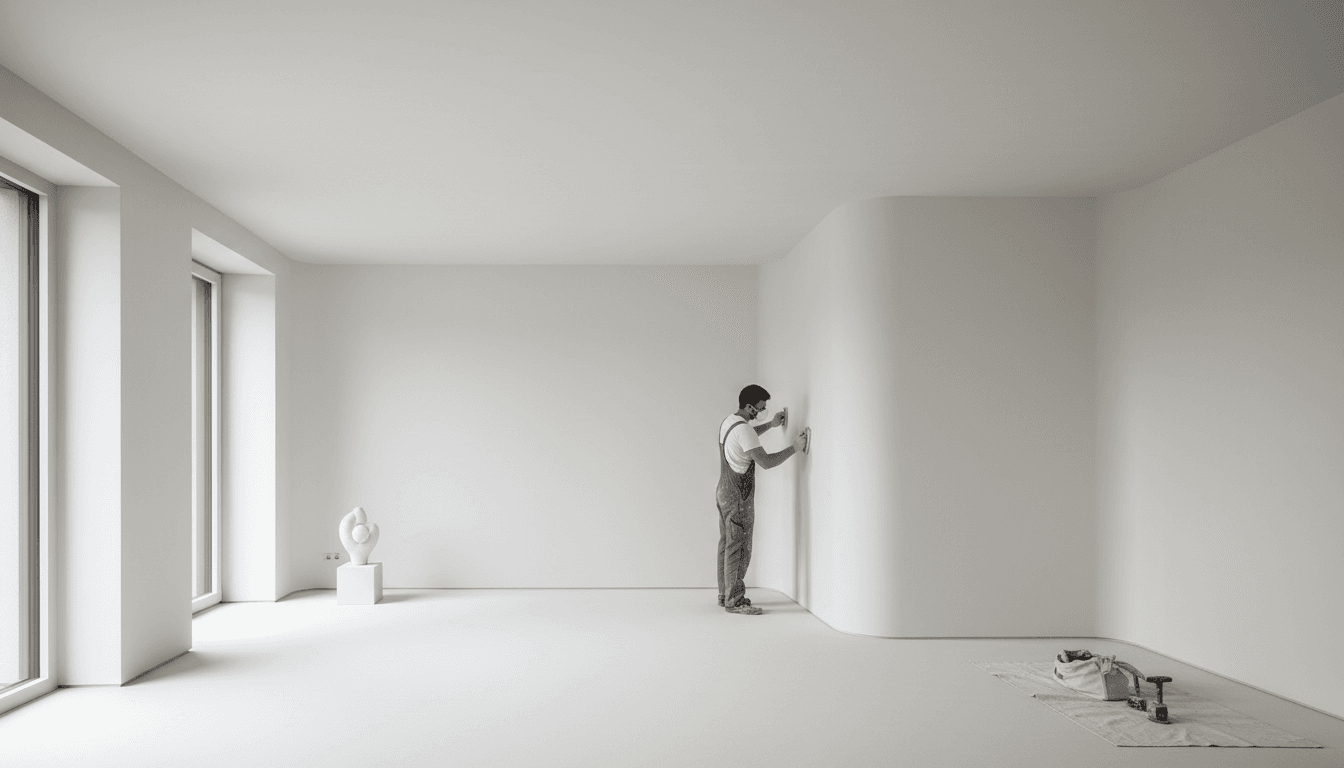
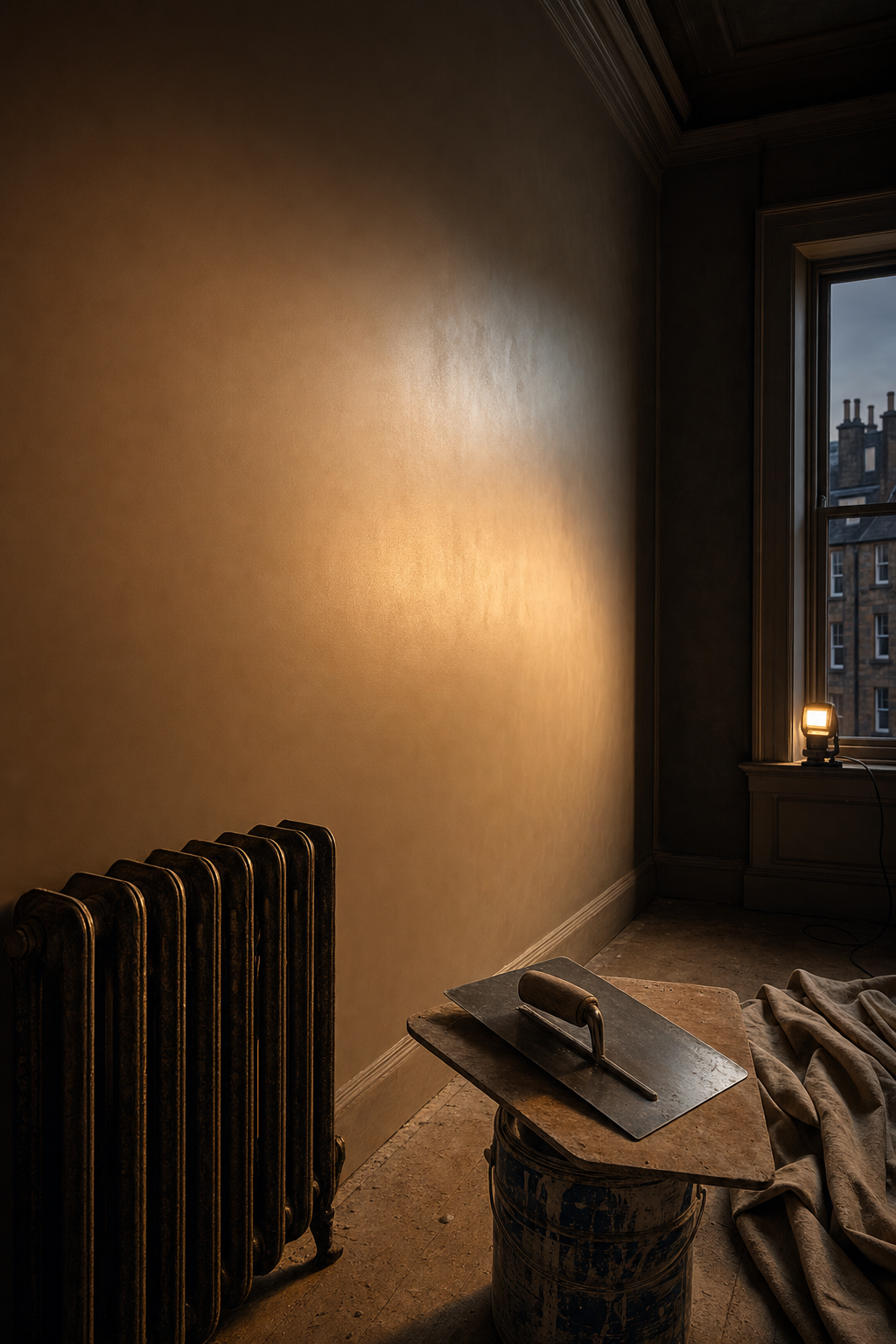
Replastering a room in Edinburgh involves stripping away old, damaged materials and applying high quality plaster to restore the structural integrity and aesthetic of historic tenement walls. The dramatic change seen in a replastering a room Edinburgh before and after project highlights the shift from uneven surfaces to a smooth, paint ready finish that preserves traditional period features. These professional restorations ensure that Georgian and Victorian homes maintain their heritage value while providing a modern, durable interior.
Living in a classic Edinburgh tenement often means dealing with centuries of architectural wear, from spiderweb cracks to blown lime plaster that sounds hollow when tapped. For many homeowners, the sight of crumbling walls hidden behind layers of dated wallpaper is a significant source of stress. A high quality replastering project is more than just a cosmetic fix; it is an essential investment in the longevity and character of your property. In this guide, PlasterTec Edinburgh explores a complete room transformation, detailing how we navigate the challenges of period features and structural repairs. You will learn about our phased approach to bonding and skimming, the realistic timelines for a professional finish, and the crucial steps for post plastering care. We provide a clear look at what to expect during a tenement restoration, including insights into budgeting for your project.
The Challenge: Restoring a Typical Edinburgh Tenement Room
Stepping into a high-ceilinged flat in Marchmont or Bruntsfield, the architectural charm is often clouded by the reality of aging walls. A typical replastering a room Edinburgh before and after project begins with a space that feels tired; think crumbling cornices, hair-line cracks tracking across the ceiling, and thick layers of wallpaper hiding a multitude of sins. These Victorian and Georgian tenements were built to last, but the materials inside have a finite lifespan.
The primary challenge lies in the traditional lath and plaster construction. Over time, the natural movement of the heavy Edinburgh stone and the seasonal expansion of the timber joists put immense pressure on the plaster keys. These keys are the small sections of plaster that squeeze between the wooden laths to secure the wall in place. When they become brittle and snap, the plaster detaches from the lath, leading to a 'blown' surface that sags or sounds hollow. Managing this fragility requires a deep understanding of period property restoration. Unlike a modern build where surfaces are uniform, tenement rooms demand an expert local plasterer who respects the original fabric while stabilizing the substrate for a modern finish.
Assessing the Damage: When to Skim and When to Strip
Homeowners frequently ask if they can simply replaster over their existing walls to save time. While a skim coat is an excellent way to refresh a tired surface, it is only as strong as what lies beneath. In a typical replastering a room Edinburgh before and after scenario, we must distinguish between cosmetic hairline cracks and genuine structural failure. Cosmetic cracks often result from decades of paint layers or minor thermal movement; these can usually be bridged with high quality scrim tape and a fresh skim.
However, structural failure in tenement rooms usually presents as "blown" plaster. We assess this by applying gentle pressure to the wall or tapping across the surface. A hollow, drum like sound indicates the plaster has detached from the timber laths. If the wall feels springy or moves when pushed, the plaster keys have snapped. Applying a heavy new coat of modern plaster over these failing sections is a significant risk; the additional weight often causes the remaining keys to fail, potentially leading to a total collapse of the ceiling or wall section.
For period property restoration, determining the health of the lath is non-negotiable. If the original lime plaster is crumbling into dust, stripping back to the lath is the only way to ensure longevity. An expert local plasterer will also look for signs of damp or wood rot in the timber strips themselves. If the substrate is sound, we proceed with bonding agents; if not, we must strip and replace, ensuring your professional plastering services in Edinburgh provide a foundation that will remain stable for decades to come.
Phase One: Preparation and Protecting the Period Features
Successful period property restoration lives or dies in the preparation phase. Before a trowel even touches the wall, we focus on protection. Edinburgh tenements often feature ornate, original cornices and deep skirting boards that are easily damaged by stray plaster or moisture. We use heavy duty, low tack tapes and plastic sheeting to create a robust barrier around these historical details, ensuring the heritage features remain untouched by the upcoming mess.
The demolition and cleaning phase is notoriously dusty. We strip away decades of wallpaper, which in many Marchmont or Bruntsfield flats, acts as the only thing holding crumbling surface plaster together. Once the substrate is exposed, we scrub the walls to remove soot from old coal fireplaces and loose lime dust. If the wall is sound but non-porous, an expert local plasterer will typically apply a specialized bonding agent. We often use Blue Grit for its mechanical key; the sand like texture provides a gritty surface for new plaster to grip effectively. For less demanding areas, a high grade PVA sealer manages suction levels. This meticulous groundwork is what ensures the replastering a room Edinburgh before and after results remain flawless for decades. Our professional plastering services in Edinburgh prioritize this invisible work to ensure the finished wall is as structurally sound as it is smooth.
Phase Two: Repairing the Foundation and Bonding
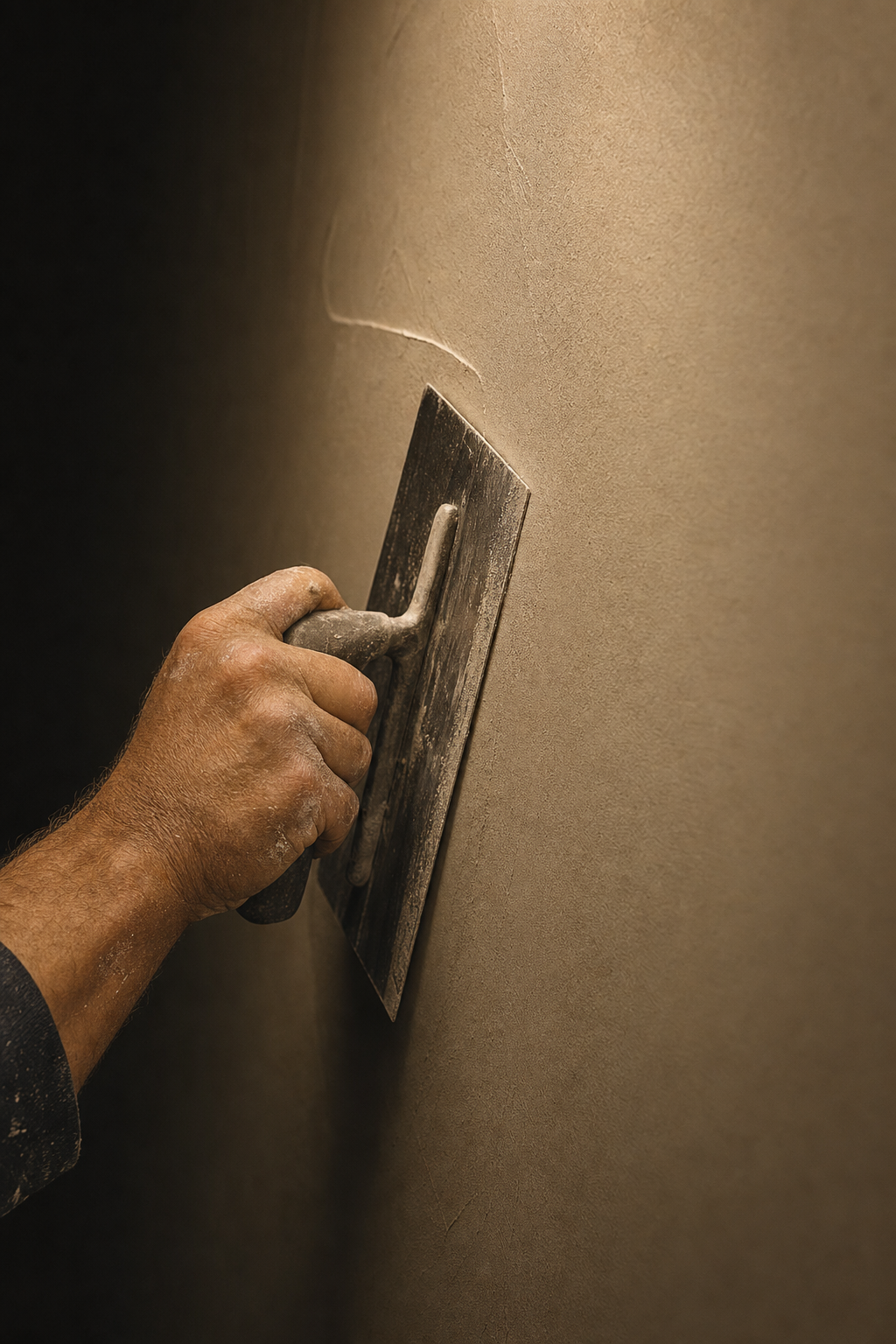
Once the substrate is prepared, the focus shifts to rebuilding the wall's structural integrity. This stage of period property restoration involves three distinct phases: backing, leveling, and finishing. For Edinburgh tenements, the choice of backing material is critical. While modern gypsum bonding plaster is efficient for deep fills on internal brick partitions, we often advocate for traditional lime plaster on external stone walls. Lime is naturally breathable, allowing moisture to migrate through the stone rather than trapping it, which prevents the damp patches and timber rot often seen in poorly executed replastering a room Edinburgh before and after projects.
When working with the original lath, the goal is to recreate the mechanical bond that has held for a century. We carefully apply the backing coat, ensuring the plaster is pressed firmly through the thin wooden strips. This creates the "keys" on the reverse side of the lath, effectively hooking the new wall in place. If we are using traditional methods, this coat may be reinforced with hair to increase tensile strength and minimize the risk of future cracking.
Following the backing coat, we apply a leveling layer. An expert local plasterer uses this stage to correct the natural undulations common in older buildings, ensuring the surface is plumb and flat. This provides the stable, uniform foundation required for the final aesthetic coat. By integrating these robust techniques, our professional plastering services in Edinburgh ensure the new plaster is not just a cosmetic fix, but a long term structural improvement that respects the building's historical fabric.
Phase Three: The Art of the Skim Coat for a Flawless Finish
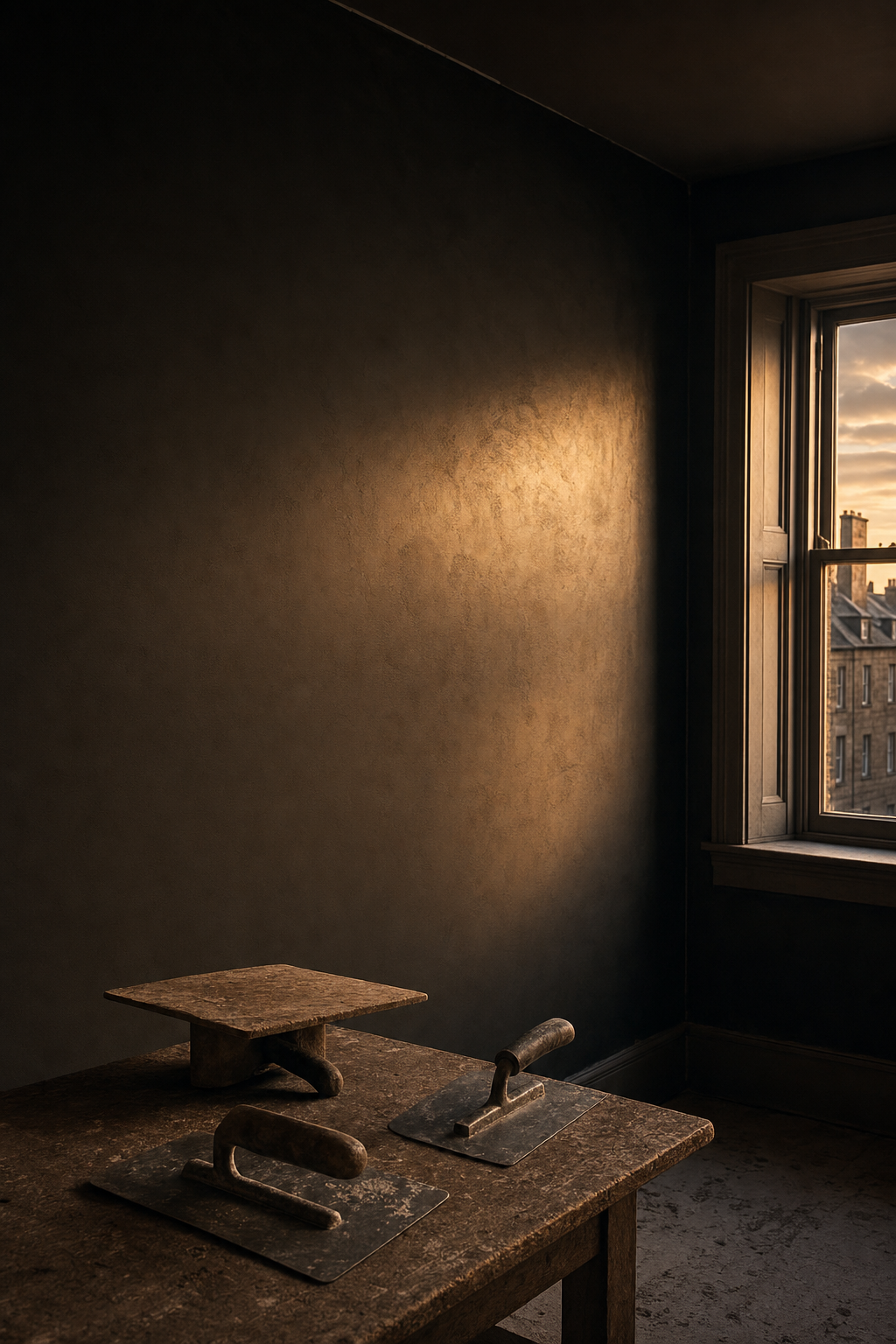
The final skim is where the skill of an expert local plasterer becomes most visible. It is a race against time, requiring a rhythmic, physical approach to apply two thin layers of finishing plaster back-to-back. The first coat provides the initial level, while the second, tighter coat fills every remaining pore. This wet-on-wet method is vital for the replastering a room Edinburgh before and after process, as it ensures the layers bond as a single, solid unit.
To achieve a flawless result, we must finish each wall in one continuous operation. If the process is interrupted, the plaster begins to pull, creating a visible seam or ridge known as a dry joint. In a grand tenement room with high ceilings, this requires precise pacing to maintain a wet edge from the cornice down to the skirting board. We use a series of trowelling passes, each with varying pressure, to compress the plaster as it sets.
The transformation is striking. The rough, grey grit of the bonding coat disappears beneath the steel trowel, replaced by a surface that gradually hardens into a polished, glass-smooth pink finish. This level of craftsmanship is essential for period property restoration, turning a battered masonry wall into a perfectly flat plane. Our professional plastering services in Edinburgh focus on this final refinement, ensuring your walls are not just repaired, but perfected.
The Timeline: How Long Does Replastering a Room Take?
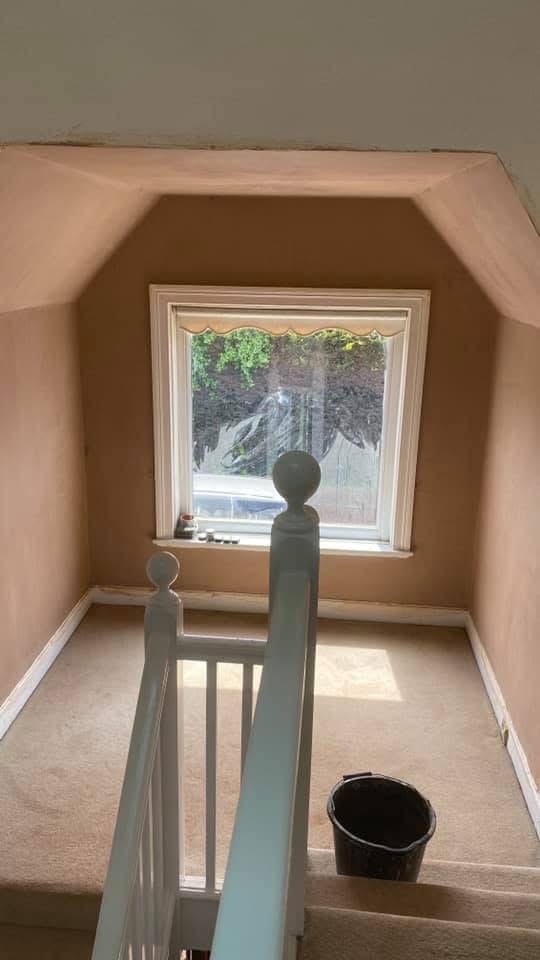
A common question homeowners ask is: how long does it take to replaster a room? For a standard 4x4m tenement space, the physical work typically spans three consecutive days. Day one focuses on the intensive preparation and stripping required to reach a stable substrate. Day two involves applying the bonding or backing coats to level the walls and address structural hollows. On day three, an expert local plasterer applies the final skim to achieve the smooth transition seen in a successful replastering a room Edinburgh before and after project.
However, the schedule does not end when the trowels are cleaned. Drying times are heavily influenced by the humid Edinburgh climate, which can slow moisture evaporation. While a thin skim coat may appear dry and ready in 3 to 5 days, deeper repairs or lime based period property restoration work can take much longer to cure fully. Our professional plastering services in Edinburgh emphasize patience during this curing phase, as rushing into decoration before the plaster has properly exhaled its moisture can lead to persistent salt blooming or paint failure.
The Reveal: Before and After Results in an Edinburgh Home
The final reveal of a tenement transformation is always a moment of profound relief for homeowners. When the protective sheets are pulled back, the visual impact of a successful replastering a room Edinburgh before and after project is immediate. Where there were once crumbling corners and sagging ceilings, there is now a crisp, monolithic surface that catches the natural light from the large bay windows. The room feels larger and brighter, shifting from a neglected space to a pristine gallery.
For those invested in period property restoration, these results go beyond aesthetics. High quality walls provide a flawless canvas for bold paint shades or intricate modern decor, but they also serve as a stamp of structural quality. In the competitive Edinburgh property market, having documented professional plastering services in Edinburgh increases a flat’s desirability and market value. It signals to future buyers that the invisible bones of the tenement have been cared for by an expert local plasterer. The stress of the renovation dissolves as the space becomes a home again, ready for the final decorative touches.
Essential Post-Plastering Care: When Can You Paint?
Once the pink finish has set, the temptation to start decorating immediately is strong. However, rushing the drying process is the most common cause of failure in a replastering a room Edinburgh before and after project. For a standard skim coat, you must wait at least 3 to 5 days until the plaster turns a uniform, pale pink with no dark patches. In Edinburgh’s naturally damp climate, this may take longer. You should never use space heaters or industrial blowers to force the walls dry; rapid moisture loss causes the plaster to shrink too quickly, resulting in spiderweb like cracks known as crazing.
Before applying your chosen colour, you must apply a mist coat. This is a diluted mixture of matt emulsion and water, typically at a ratio of 70/30 or 80/20. Fresh plaster is incredibly thirsty and will suck the moisture out of standard paint instantly, preventing a proper bond. The mist coat seals the surface and provides a key for subsequent layers. Failing to do this often leads to the paint peeling off in large sheets later. Our professional plastering services in Edinburgh ensure a finish that, when properly primed, lasts for years. Following these steps preserves the work of your expert local plasterer and ensures your period property restoration remains pristine.
Understanding the Cost of Replastering in Edinburgh
Estimating the investment for a replastering a room Edinburgh before and after project requires looking beyond generic online estimates. While the average room plastering cost UK wide might suggest a lower baseline, Edinburgh’s historic tenements present specific variables. For a standard 4x4m room, homeowners should typically budget between £800 and £1,600, depending on the complexity of the repair.
Several factors drive this price range: - Ceiling Height: Tenement ceilings in areas like Marchmont or the New Town often exceed three metres, requiring significantly more material and specialized access equipment compared to modern builds. - Substrate State: A simple skim coat is more affordable than a full strip back to the timber laths, which involves intensive labor and high debris removal costs. - Material Choice: Utilizing traditional lime for period property restoration to ensure wall breathability carries a premium over modern gypsum bonding.
An expert local plasterer will provide a detailed quote that accounts for these structural nuances. Investing in professional plastering services in Edinburgh ensures the final price reflects a long term structural solution rather than a temporary cosmetic fix.
Transforming a classic Edinburgh tenement is a rewarding project that breathes new life into historic spaces. While the results of a successful renovation are undeniable, the process requires patience and precision to handle aged masonry correctly. If you find yourself needing expert support to achieve that perfect, smooth finish in your own home, professional plastering services can make the transition seamless. We are always available to help you navigate the unique challenges of local properties, ensuring your renovation is both beautiful and lasting.