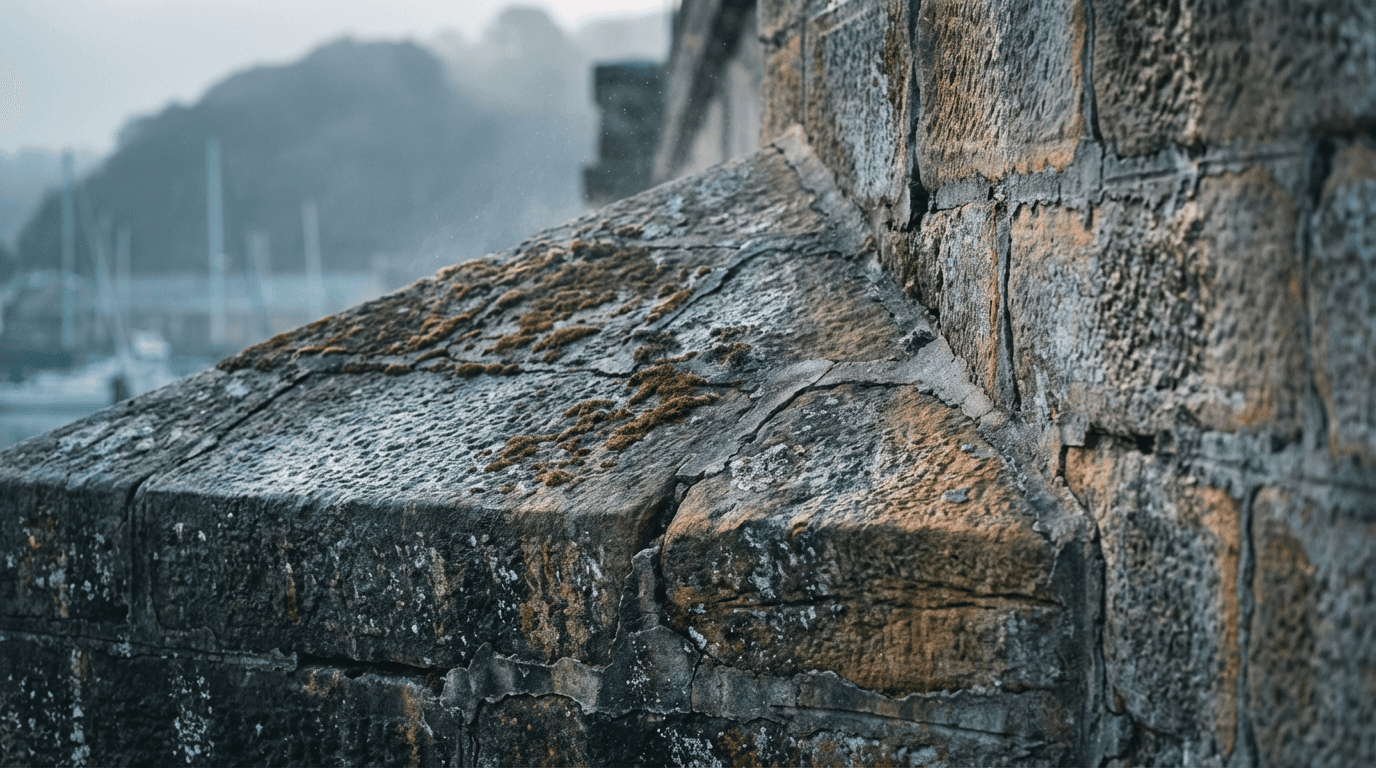

Preparing walls for winter Edinburgh requires repairing cracked render and replacing non-breathable cement with traditional lime finishes to prevent moisture from freezing and expanding within the masonry. Homeowners should also address internal damp issues and blown plaster early, as the cold Scottish climate necessitates longer drying times for essential maintenance and repair work.
As the Edinburgh skyline settles into its familiar winter grey, homeowners across the city often feel a growing sense of unease regarding the structural resilience of their properties. Our local tenements and period stone houses are architectural treasures, yet they face significant environmental stress as temperatures drop and coastal moisture lingers. Neglecting a hairline crack in your exterior render now can lead to extensive internal damage once the freeze thaw cycle begins in earnest. At PlasterTec Edinburgh, we understand that maintaining these historic walls requires a specialized approach rooted in traditional techniques and modern expertise. In this guide, we will explore how to identify early warning signs of render failure, the vital importance of lime breathability in Scottish masonry, and the practical steps you should take to protect your home. From assessing internal damp to managing winter plastering projects, these insights will ensure your walls remain sound until spring.
Why Edinburgh Winters Are Tough on Period Walls
Edinburgh's coastal location creates a specific set of challenges for traditional masonry. The city faces persistent, horizontal wind-driven rain coming off the Firth of Forth; this moisture is forced directly into the fabric of solid stone buildings. Unlike modern cavity wall constructions that provide a buffer against the elements, the sandstone tenements of Marchmont and the New Town are solid structures that act as a single, permeable mass.
When water enters the porous stone or the mortar joints, it remains trapped within the substrate. As temperatures drop during the inevitable Scottish cold snaps, the freeze-thaw cycle begins. Water expands as it turns to ice, exerting immense internal pressure. This process can cause the face of the stone to delaminate or the external finish to pull away from the wall entirely.
Proactive maintenance is essential because of our local micro-climate. Preparing walls for winter Edinburgh involves identifying these vulnerabilities before the first hard frost sets in. Waiting for internal damp patches to appear often means the external damage is already significant. Homeowners must recognise that period properties were designed to manage moisture through breathability. Any failure in the external envelope, combined with winter saturation, accelerates decay. We recommend that residents book a wall survey to evaluate these risks before the temperature consistently drops below freezing.
Exterior Render Inspection: Spotting Problems Before the Frost
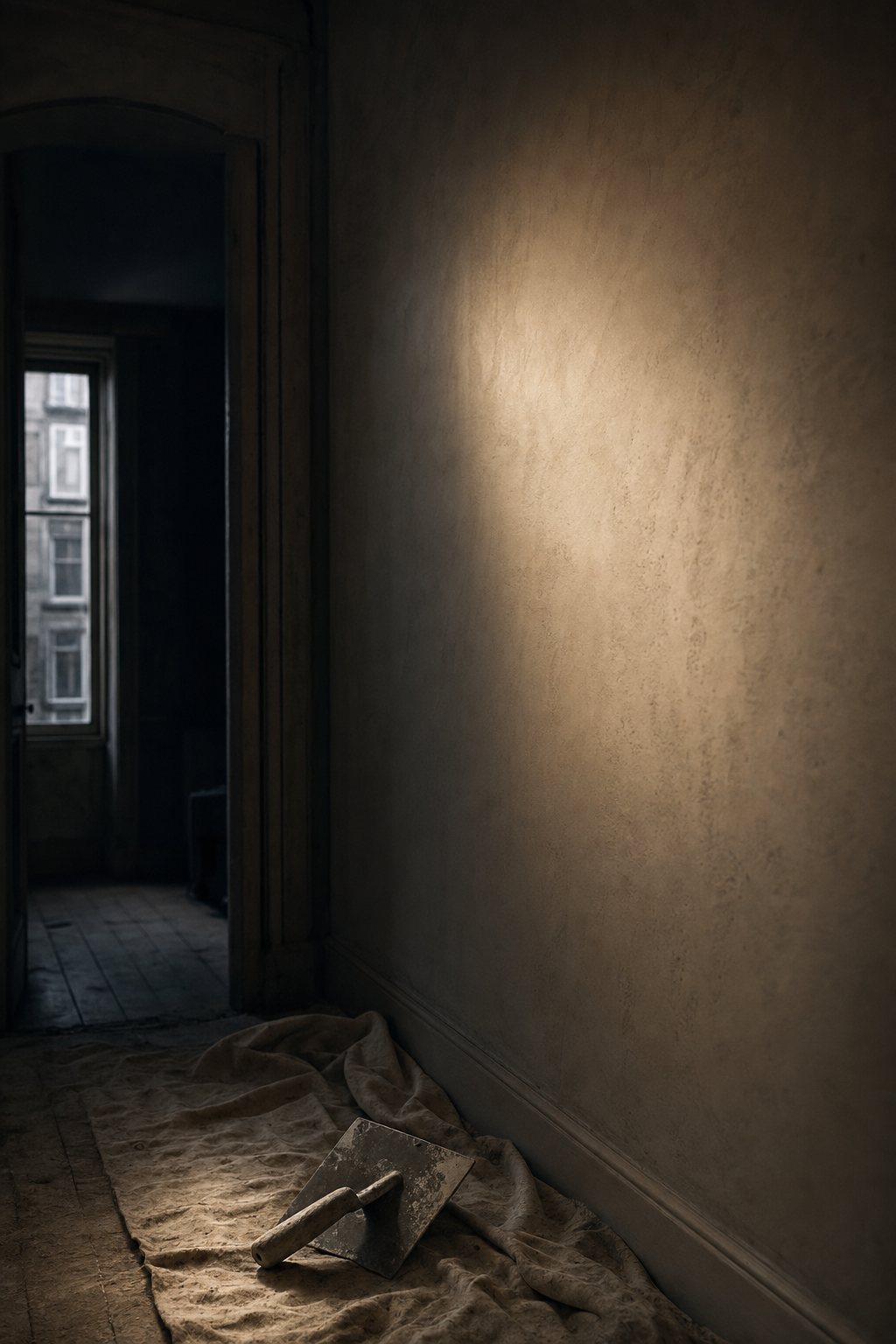
Conducting a thorough visual assessment is the first step in preparing walls for winter Edinburgh. Begin by walking the perimeter of your property, ideally on a day when the stone is dry, to look for variations in colour or texture. Focus your attention on the elevations most exposed to the wind-driven rain from the coast, as these areas bear the brunt of the seasonal weather.
A physical check is necessary for any suspected areas. To identify 'blown' render, gently tap the surface with your knuckles or a small wooden tool. A healthy, well-bonded finish will produce a dull, solid thud. If you hear a distinct hollow or 'drummy' sound, the render has detached from the underlying masonry. These air pockets are high-risk zones where water collects, sits against the stone, and eventually freezes.
In many Edinburgh tenements, you will encounter traditional harling. This textured finish, often containing small stones, is designed to increase the surface area for moisture evaporation. Check if these stones are still firmly embedded. If the harling feels soft, sandy, or crumbles away when touched, the lime binder may have failed. If large sections feel loose or sound hollow, you should seek professional rendering services to prevent total delamination during a freeze.
Distinguishing between crack types is also vital. Cosmetic hairline cracks often result from minor thermal movement or old shrinkage. However, any crack wider than a couple of millimetres, or those that follow a stepped pattern through the joints, indicates a potential structural defect. These openings act as funnels for moisture. If you notice wide fissures or patches where the render is visibly bulging away from the wall, you should book a wall survey immediately. Addressing these vulnerabilities now prevents the accelerated decay caused by the expansion of ice within the wall fabric.
The Freeze-Thaw Cycle: How Small Cracks Become Big Problems
After identifying hollow sounds or hairline fissures during your inspection, understanding the physics at play is essential for preparing walls for winter Edinburgh. Many homeowners ask if cracked render lets water in; the technical reality is that wind-driven rain penetrates even the smallest defects through capillary action. Once moisture is trapped behind the surface, the freeze-thaw cycle begins.
As temperatures plummet, water undergoes a phase change, expanding by approximately 9 percent in volume. This expansion exerts significant hydraulic pressure between the render and the stone substrate, effectively prying the two materials apart. A crack that seems minor in October acts as a funnel for moisture throughout the autumn. By February, repeated freezing and thawing cycles can force entire sections to delaminate, resulting in large, fallen patches of render and exposed masonry. To avoid accelerated decay and costly masonry repairs, you should book a wall survey to rectify these vulnerabilities before the first hard frost sets in.
Internal Wall Health: Tracking Damp and Blown Plaster in Tenements
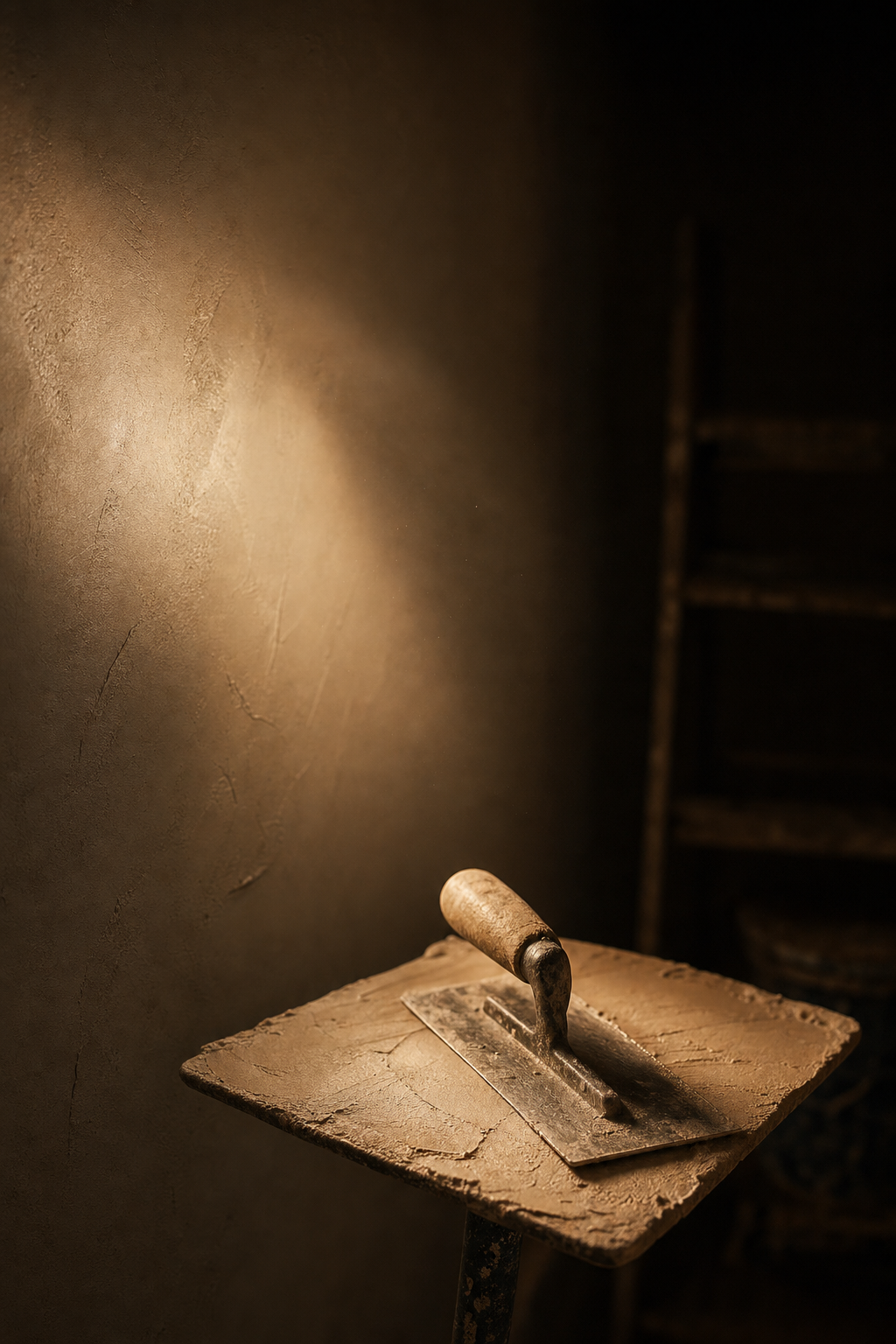
When external protections fail, the focus of preparing walls for winter Edinburgh must shift to the internal fabric of the tenement. Symptoms of moisture ingress often manifest as salt staining, a white crystalline powder that pushes through the paintwork, or as blown internal plaster that sounds hollow when tapped. This internal damage is usually a direct consequence of the penetrating damp mentioned in previous sections, where water travels through external cracks and saturates the solid stone substrate.
Unlike rising damp, which typically affects only the base of ground-floor properties by pulling moisture from the earth, penetrating damp can appear at any height. It is particularly common around window reveals or on the windward elevations of Marchmont and New Town buildings. A saturated wall loses its thermal efficiency, creating localized cold spots. In the typical Edinburgh winter, these chilled surfaces attract condensation from indoor activities like cooking or drying clothes, leading to persistent mould growth that is often misidentified as a simple plumbing leak.
If the internal plaster has become soft, crumbly, or detached from the lath or stone, simple repainting will not suffice. The salts trapped within the plaster are hygroscopic, meaning they will continue to attract moisture from the atmosphere, causing the finish to fail repeatedly even after the external environment dries out. In these cases, professional plastering is required to strip back the contaminated material and apply a specialist renovation plaster or a breathable finish that can manage residual moisture. Before starting internal repairs, it is vital to book a wall survey to ensure the external source of the leak has been fully resolved.
The Importance of Breathability in Scottish Stone Homes
Maintaining the structural integrity of an Edinburgh tenement requires an understanding of how traditional masonry handles moisture. Breathability is the fundamental principle here; solid stone walls were never meant to be sealed. When preparing walls for winter Edinburgh, homeowners often make the mistake of using modern, impermeable materials like cement render or plastic-based masonry paints. These products create a rigid barrier that traps moisture within the stone substrate. During a saturated Scottish winter, this trapped water has no escape route, leading to hydrostatic pressure that forces the stone to crumble or the render to shear off.
To protect these period properties, we advocate for the use of lime-based materials. Unlike cement, lime plaster is vapour-permeable; it acts like a wick, drawing moisture out of the wall and allowing it to evaporate harmlessly. Traditional harling or lime render provides a sacrificial layer that manages the freeze-thaw cycle far more effectively than rigid modern alternatives.
Material Property | Traditional Lime | Modern Cement/Plastic |
|---|---|---|
Vapour Permeability | High (Breathable) | Low (Impermeable) |
Flexibility | Accommodates movement | Rigid (Prone to cracking) |
Moisture Management | Wicks water out | Traps water inside |
Structural Impact | Protects soft stone | Can cause stone decay |
If you are noticing internal damp or external cracking, it is essential to use professional plastering services that specialise in breathable finishes. Opting for lime ensures that the building envelope can regulate its own moisture levels, preventing the deep-seated saturation that causes long-term masonry decay. Before applying any new finishes, you should book a wall survey to determine if previous, inappropriate repairs are currently trapping water.
Can You Plaster in the Edinburgh Winter?
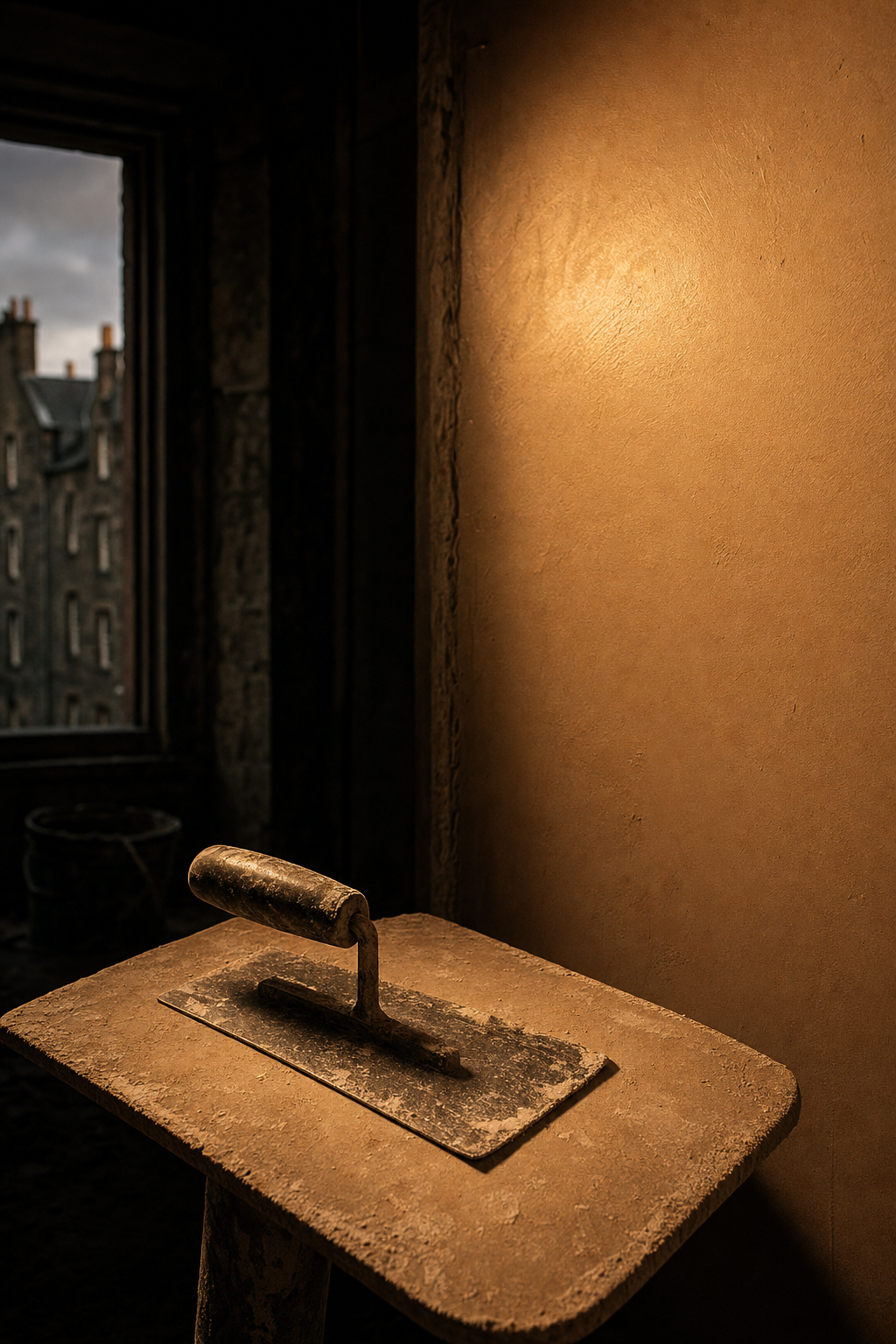
Homeowners frequently ask if the persistent cold and damp of a Scottish January should halt their renovation plans. When preparing walls for winter Edinburgh, the answer depends entirely on which side of the stone you are working on. External rendering services are strictly weather dependent; materials like lime and cement requires a minimum consistent temperature of 5 degrees Celsius to cure properly. If the temperature drops toward freezing before the binder has set, the moisture within the mix expands and destroys the bond, leading to immediate failure and crumbled surfaces.
Conversely, internal professional plastering can be successfully completed year round. Because the interior environment is shielded from the elements, we can manage the drying cycle regardless of the frost outside. Success indoors during winter relies on controlled evaporation. You should avoid the temptation to blast radiators, as rapid, uneven heat causes the plaster to dry too quickly and crack. Instead, maintain a consistent, gentle ambient heat and use a dehumidifier to steadily extract moisture from the air. This gradual approach ensures a durable finish and prevents the modern plaster from reacting poorly to the cold stone substrate. If you are concerned about moisture levels in your tenement before starting work, you should book a wall survey to ensure the masonry is sufficiently dry for new finishes.
Pre-Winter Checklist for Edinburgh Homeowners
Taking proactive steps now ensures your property remains weather-tight throughout the harshest months. Use this checklist as a practical guide for preparing walls for winter Edinburgh:
Conduct a visual inspection: Walk the perimeter of your home and look for new cracks, bulging render, or areas where harling stones have fallen away. Pay close attention to the gable ends most exposed to coastal winds.
Clear gutters and downpipes: Ensure water is directed away from the masonry. Leaking joints or overflowing gutters saturate the stone, making it highly susceptible to freeze-thaw damage.
Check window mastic and pointing: Inspect the junctions where window frames meet the stone. Gaps in these seals or missing mortar in the surrounding pointing act as direct conduits for moisture ingress.
Identify internal cold spots: Use your hand to feel for unusually cold or damp patches on the inside of external walls. If you notice salt staining or crumbling finishes, you may require professional plastering to address the underlying moisture issue.
Test for 'blown' sections: Tap any suspicious areas of render. If you hear a hollow sound, the finish has detached from the substrate. In these instances, you should book a wall survey to determine if targeted rendering services are needed before the first hard frost.
Taking the time to insulate and repair your period property now ensures a comfortable, damp-free winter. While many small maintenance tasks are manageable for homeowners, older buildings often present unique challenges that require a specialist touch. If you want expert help to restore or protect your interior walls, our professional Plastering services can provide the durable finish your home deserves. Let us help you keep your historic Edinburgh property in peak condition before the coldest weather arrives.